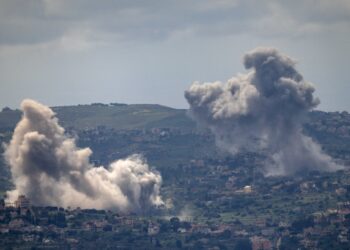
U.S. efforts to secure a Gaza ceasefire remain stalled after nearly a year of fighting. Iran-backed Houthi rebels continue to attack Red Sea shipping. And now, despite intense U.S.-led diplomacy, the Israel-Hezbollah conflict threatens to flare into an all-out regional war.
With the clock ticking on his administration, U.S. President Joe Biden faces an arc of Middle East crises likely to defy solution before he leaves office in January and which look all but certain to tarnish his foreign policy legacy, analysts and foreign diplomats say.
Biden has struggled over the past year to thread the needle of embracing Israel’s right to self-defense against Palestinian Hamas militants in Gaza and the Hezbollah group in Lebanon while trying to contain civilian casualties and prevent a spiral into a broader Middle East conflict.
Time and again he has confronted the shortcomings of that strategy, the latest being Israel’s rejection on Thursday of a U.S.-backed proposal for a 21-day truce across the Lebanon border as it pressed ahead with strikes that have killed hundreds of Lebanese.
“What we’re seeing are the limits of U.S. power and influence in the Middle East,” said Jonathan Panikoff, the U.S. government’s former deputy national intelligence officer for the region.
Perhaps the clearest example of that trend has been Biden’s reluctance to exercise much U.S. leverage – as Israel’s top arms supplier and diplomatic shield at the United Nations – to bend Israeli Prime Minister Benjamin Netanyahu to Washington’s will.
For nearly a year the United States has sought unsuccessfully to help broker a deal between Israel and Hamas to halt the fighting and free hostages taken by the militants in their Oct. 7 cross-border rampage that triggered the Gaza war.
No breakthrough is imminent, say people familiar with the matter.
U.S. officials are quick to pin blame for failed negotiations on Hamas but some also cite Netanyahu’s shifting demands.
During U.S. Secretary of State Antony Blinken’s nine trips to the region since Oct. 7, the top U.S. diplomat several times found himself at odds with senior Israeli leaders.
In one instance last November, Blinken at a news conference urged Israel to pause its military offensive in Gaza to allow aid to enter the Palestinian enclave. Moments later, Netanyahu rejected the idea in a televised statement, saying he had made clear to Blinken that Israel was continuing with its operation “full force.”
The White House did not immediately respond to a request for comment for this story.
U.S. CREDIBILITY AT STAKE
Biden has been credited by fellow Western leaders with reinvigorating key U.S. alliances, including with NATO and top Asian partners, after his White House predecessor, Donald Trump, questioned the value of such relationships.
That was demonstrated in April when the Biden administration marshalled support from regional and European partners to help defend Israel from an Iranian drone and missile attack.
But some foreign diplomats say Biden’s handling of the volatile Middle East, especially his response to the Gaza war, has frayed U.S. credibility abroad.
“President Biden’s original blunder was to say the U.S. will, no matter what, stand for Israel,” one Western official said. “We have never recovered from that.”
A Middle East diplomat said U.S. diplomacy had “failed to impress adversaries” and noted that Biden sent military assets to the region after Oct. 7 as a warning to Iran and its proxy groups but that it did not seem to deter them completely.
Yemen’s Iran-backed Houthi rebels have kept up a steady barrage of missile attacks on commercial shipping in the Red Sea despite Biden and other Western leaders providing warships for beefed-up protection.
“He could have been quicker to respond and more severe to these attacks by proxy forces,” said Michael ‘Mick’ Mulroy, a former deputy assistant secretary of defense for the Middle East under the Trump administration.
U.S. officials have repeatedly pushed back on such criticism, saying their diplomacy has made a difference for the better and that the U.S. military deployment to the region had helped so far to avert a spillover from Gaza into a regional war.
“Diplomacy is not a matter of snapping our fingers and – voila,” U.S. Ambassador to the U.N. Linda Thomas-Greenfield told the Security Council earlier this month. “It takes hard work. It takes effort and, unfortunately, it takes time. It has not failed.”
Even so, since Oct. 7, Biden has seen his hopes dashed for what was once touted as a potential signature foreign policy achievement – normalization of relations between Israel and Saudi Arabia coupled with U.S. security guarantees for Riyadh.
At the United Nations, where the Security Council in June backed Biden’s plan for a Gaza ceasefire-hostage deal, there are signs that patience with U.S. Middle East diplomacy has waned.
Jordan’s Foreign Minister Ayman Safadi said on Thursday that efforts to stop the violence in the Middle East constituted “a year of failure” and that if the Israeli government was not held to account it was not going to listen to international law, “and it’s not even listening to its friends, including the U.S.”
Panikoff, the former intelligence official now at the Atlantic Council think-tank in Washington, described the crux of the Biden administration’s Gaza dilemma as: “Plan A hasn’t worked for months. So where’s Plan B?”
With Israel threatening a ground offensive in Lebanon and vowing to keep pressure on Iran-backed Hezbollah until thousands of Israeli evacuees can return to their homes in the north, the crisis there could also deepen.
The trajectory of the Lebanon conflict could have further implications not only for Biden’s legacy but by extension the presidential campaign of Vice President Kamala Harris. Some Democratic progressive voters are already angry over unflinching U.S. support for Israel.
It remains to be seen whether Netanyahu will heed Biden’s entreaties to avoid further escalation in Lebanon.
As a lame duck president in his final four months in office, analysts say Biden cannot be faulted for keeping up his efforts to ease Middle East turmoil – but they expect his successor to inherit the current crises.
(Reporting by Matt Spetalnick John Irish and Humeyra Pamuk)