The decision was expected to take minutes. But after nearly three years of debate, members of the world’s leading authority on climate change still can’t agree on a timeline to publish its next review of the latest science on the warming planet.
Such assessments from the Intergovernmental Panel on Climate Change (IPCC) have informed every major United Nations climate agreement for three decades. But the impasse over publication dates could leave countries to decide the next phase of action without consensus on critical issues – including the extent to which some global warming might be reversible – according to interviews with more than a dozen current and former IPCC scientists, government negotiators and meeting observers.
The dispute reflects deep rifts between wealthy industrialized nations, major emerging economies and poorer nations over how to respond to rapidly warming temperatures and how much of that burden should be shouldered by different countries.
On Monday, representatives from the IPCC’s 195 member states will convene in Addis Ababa, Ethiopia’s capital, for a plenary meeting many see as the last chance to agree publication dates falling before UN climate talks in November 2028. That’s when governments are due to assess progress toward goals set out in the landmark agreement reached in Paris in 2015.
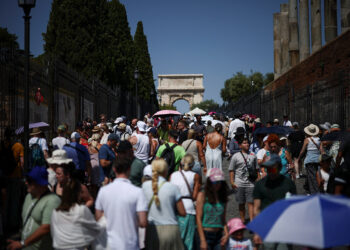
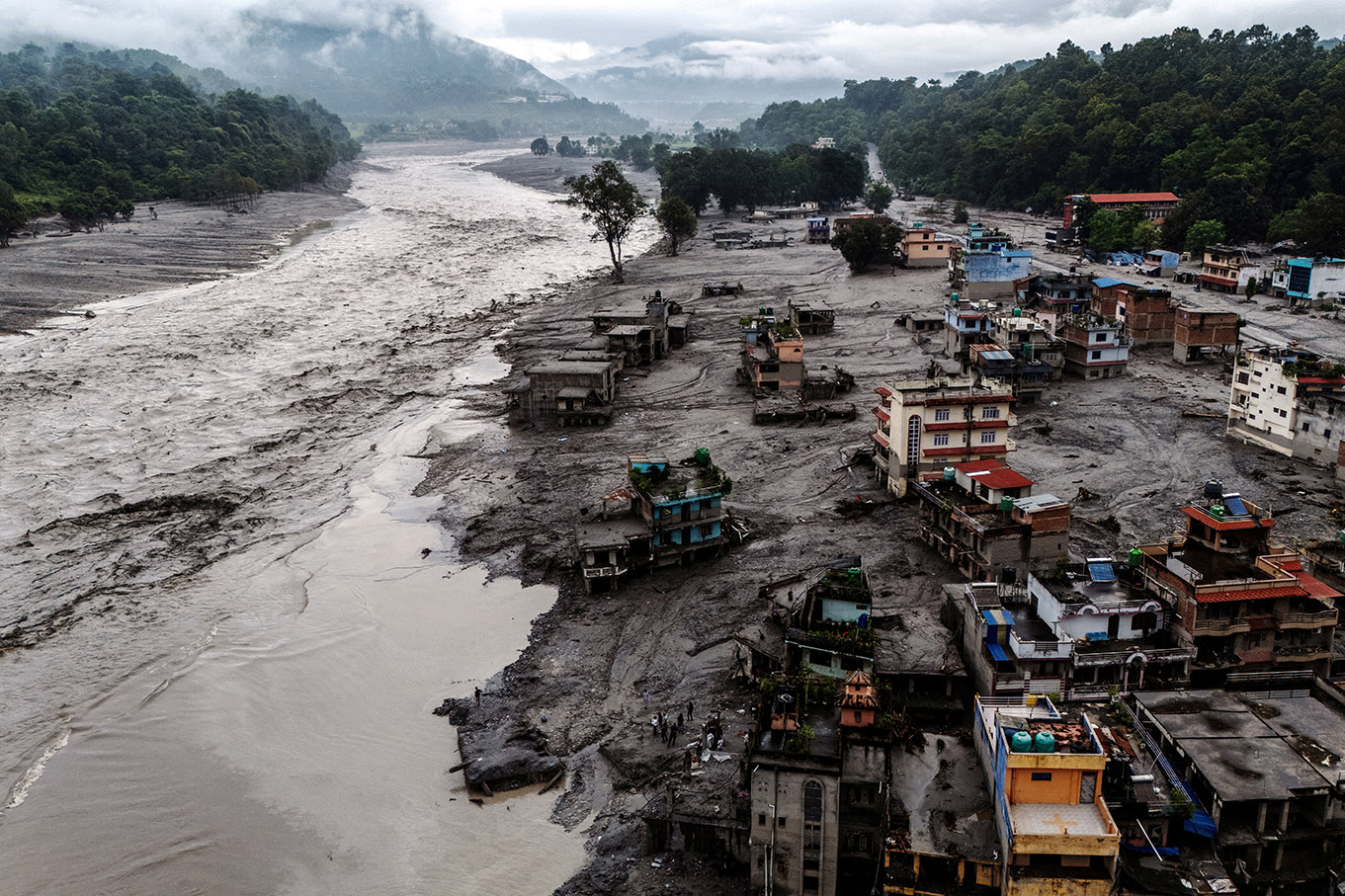
The UN Environment Programme has said repeatedly that global efforts to limit warming are falling short and that faster emissions cuts are needed to avoid more extreme weather and climate-related disasters. Scientists have said climate change fueled wildfires that surged across Europe this summer and likely played a role in landslides and flash floods that killed hundreds in Nepal and China’s Tibet.
The possibility the IPCC’s reports might not be ready in time for the 2028 climate talks has alarmed a coalition of countries pushing for more robust action. Those discussions are intended to guide decisions on climate financing and national targets to bring down greenhouse gas emissions.
“Access to the latest and best available science … enables a just, equitable, evidence-based approach to addressing the greatest challenge of our time, rather than one driven by those whose entrenched interests are at odds with reducing greenhouse gases,” the High Ambition Coalition said in a statement due to be published on Friday.
The statement, is signed by more than 30 countries, including European, Latin American and small-island states.
The IPCC does not conduct original research. But its reviews of the world’s existing knowledge on climate change – published every five to seven years – carry weight with governments because they are written by hundreds of international experts and approved by every member state. IPCC findings contributed to a commitment in the Paris Agreement to try to limit global warming to 1.5 degrees Celsius above pre-industrial levels. Its reports are also used by governments to plan their responses to climate change and have been cited in international court rulings.
Countries including India, Kenya, Saudi Arabia, Russia and China are pressing for more time to prepare the IPCC’s next reports to ensure scientists from less-resourced countries can make meaningful contributions. Some struggle to publish new research in time to be included or to take time off from their regular jobs for unpaid IPCC work, they say.
“If you have a process that goes very quickly … it wouldn’t be inclusive,” said Joyce Kimutai, a climate scientist who represents Kenya at the IPCC.
‘THE ELEPHANT IN THE ROOM’
The deadlock – unprecedented in the IPCC’s history – comes as the organization faces increasing pressure from governments critical of climate policies they say hurt industrial competitiveness or restrict the ability of emerging economies to use cheaper, more polluting fuels to meet development needs. The United States, the IPCC’s biggest funder, quit the organization in January.
The IPCC will publish three key reports: one on the extent and causes of climate change, another on vulnerabilities and how countries can adapt, and a third on options to avoid warming getting worse. Scientists chairing groups preparing the reports have proposed a work plan that would see all three approved by September 2028.
Robert Vautard, a French co-chair, said the proposal was based on the anticipated workload rather than the timing of the 2028 UN summit. Report timelines are typically approved in “a matter of minutes,” he added.
Opponents of the chairs’ proposal want the second and third reports pushed into 2029, saying the timeline is too short to analyze thousands of studies, agree wording and complete expert and government reviews.
The dispute is sowing discord and distrust in an organization intended to help countries bridge divides by providing a scientific basis for climate negotiations. Observers at five previous IPCC meetings described days of contentious debate.
Participants have traded accusations of politicizing the IPCC’s work.
Some pushing to publish before the 2028 summit note that major oil-producing nations are among the most vocal advocates for more time, accusing them of trying to avoid pressure to reduce carbon dioxide emissions more quickly.
“The elephant in the room is the politics,” said Lisa Schipper, an IPCC editor from Sweden.
Some countries, she said, are using the debate as a “stalling tactic.”
Russia’s economy ministry said framing the debate as a confrontation with oil producers was a “deliberate misrepresentation.”
Attempts to synchronize the assessment cycle with UN negotiations “raise serious questions about preserving the IPCC’s independent nature,” the ministry said. “In such circumstances, there is a risk that scientific assessments could be used to advance a predetermined climate policy agenda.”
Thiagarajan Jayaraman, a scientist who represents India at the IPCC, said it was “short-sighted” to suggest the value of the body’s work rests solely on contributing to the 2028 UN talks. Representatives from Saudi Arabia and China have made similar arguments at previous meetings. Their governments did not respond to questions for this article.
EQUITY AND INCLUSIVITY
Developing countries have long argued their perspectives are not sufficiently reflected in IPCC reports because they do not have enough experts involved and because their researchers have fewer resources to publish peer-reviewed studies.
The result, Thiagarajan said, is that issues of “equity and inclusivity” are in some instances “simply ducked.”
He takes issue, for example, with what he says is a lack of consideration of wealthy countries’ historical contributions to global warming and poorer nations’ development needs in models the IPCC uses to evaluate how much temperatures might rise under different emissions scenarios.
India argues countries that got rich through centuries of fossil fuel use should make the biggest emissions cuts. Some industrialized nations want major emerging economies such as India and China, now among the world’s biggest emitters, to also make ambitious cuts.
The IPCC says it is taking steps to make assessments more inclusive. Just over half the lead authors and editors selected for the next review are from developing economies or ones in transition.
The next reports will for the first time include chapters on climate finance and addressing irreversible harm inflicted on some countries, IPCC Chair Jim Skea said in June, issues important to many developing nations.
Jozef Pecho, a climatologist at GoSpace Labs in Slovakia who uses IPCC reports in his work, said he feared “the room for cherry picking and distorting science would grow” if governments don’t have an updated assessment for the 2028 UN talks.
Countries pushing for that timeline at the IPCC say negotiators would otherwise have to rely on reports published in 2021-22. Much has changed since then.
In 2024, global temperatures averaged more than 1.5 C above pre-industrial levels for the first time. The next reports will attempt to fill knowledge gaps about the overshoot, including the potential consequences of interventions to remove carbon dioxide from the atmosphere.
Joeri Rogelj, an IPCC author from Belgium, said there was no use in writing such assessments if they aren’t available when policy makers can use them.
“The importance of the IPCC … is that these authoritative assessments of science are being used,” he said.
(Reporting by Kate Abnett )