Germany’s far right and far left both made big gains in Sunday’s state elections, exposing yet again the erosion of the political centre in Europe’s largest economy as well as Chancellor Friedrich Merz’s weakening hold on power.
The anti-immigration Alternative for Germany (AfD) confirmed its strength in the formerly communist eastern states by taking first place in Mecklenburg-Western Pomerania state, building on its triumph two weeks ago in Saxony-Anhalt.
The AfD also recorded its best-ever result in Berlin, where the far-left Left Party came first and looks set to replace Merz’s conservative Christian Democrats (CDU) in the mayor’s office.
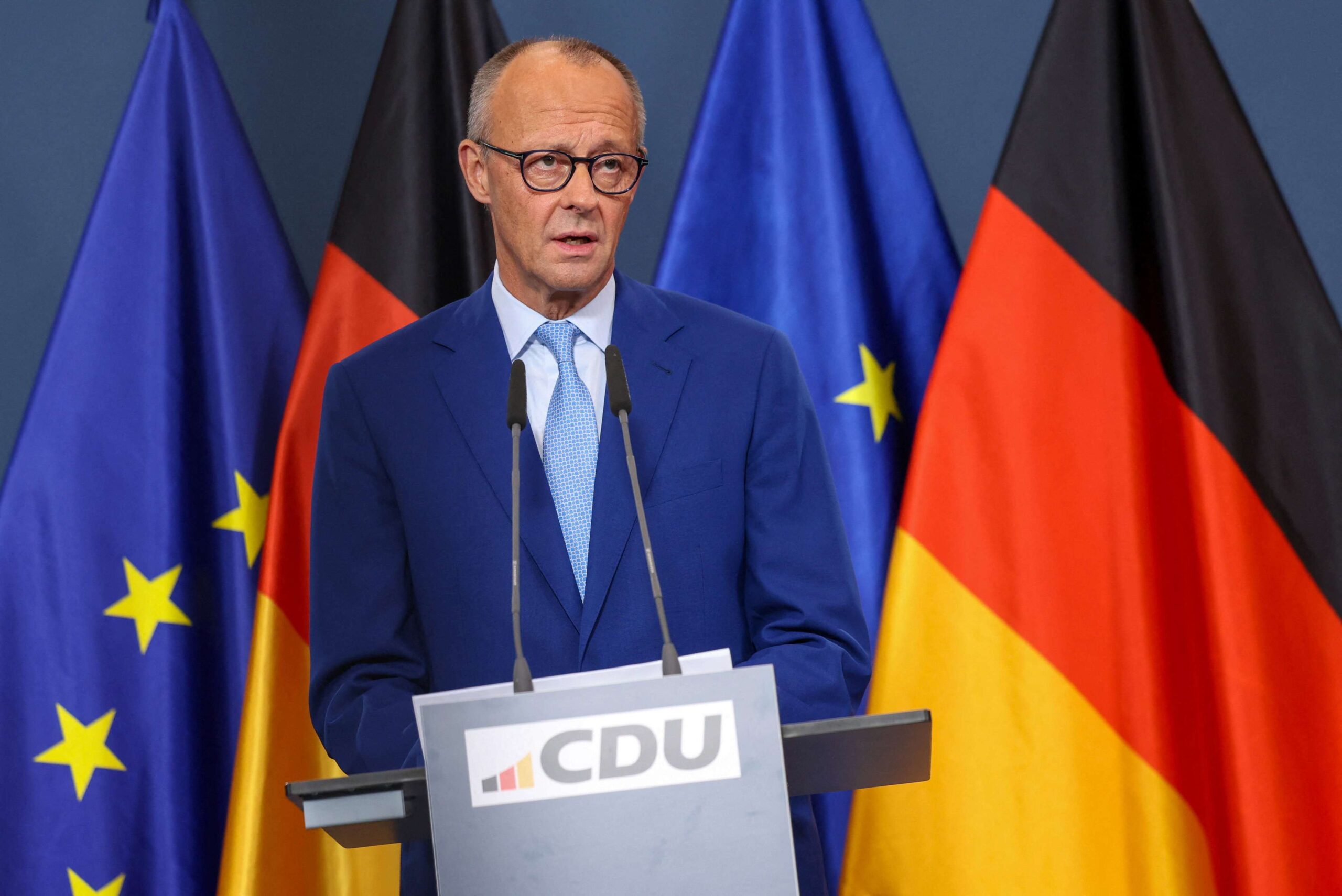
Merz called the result in Mecklenburg-Western Pomerania — the worst in CDU history — “a disaster”. But he defied speculation he might step down, pledging to remain to pass a package of tax and pension reforms that he hopes will help revive Germany’s sluggish economy.
For now, at least, the party has stood behind him, although the result will add to pressure within his coalition with the centre-left Social Democrats (SPD), some of whom want to water down parts of the reform agenda.
“We have to analyse, as a government, why there is this sense of uncertainty in the country,” SPD co-leader Lars Klingbeil said.
A pervasive sense of economic malaise and disillusion with traditional political parties point to further turbulence ahead, with a raft of state elections in western Germany due next year.
“Germany is entering a period of political instability where viable coalitions are harder and harder to build, and that doesn’t bode well for Europe when Germany is the de facto leader,” said Sudha David-Wilp, a senior fellow at the German Marshall Fund of the United States.
The AfD wants to expel foreigners with no right to stay in Germany, restore energy ties with Russia and quit the euro, while the Left Party wants to cap rents and nationalise large parts of the Berlin housing market.
By contrast, Merz’s pursuit of what he says are painful but necessary reforms has yet to yield improvements that voters can feel.
“We can see how difficult it is to win people over while in government and from the centre of society,” said Stefan Evers, the CDU’s lead candidate in Berlin.
DISASTER
Even before the election, Merz’s approval ratings were at a record low and his party has trailed the AfD in national polling for months. “People would tell us that as long as he had a say in things, we wouldn’t vote for you,” said one CDU election campaigner in Mecklenburg-Western Pomerania.
From the start of his time in office, when a normally routine parliamentary vote to confirm him as chancellor turned into a humiliation requiring a second round of voting, Merz has struggled to establish his authority.
There have been repeated gaffes, from saying people in Germany needed to work longer hours to identifying as “middle class” while working as a highly remunerated supervisory board chairman of asset management firm BlackRock.
Surveys indicate that his communication lapses and his difficulty in establishing an emotional connection with voters anxious about their economic future both contributed to the outcome of all five state elections this year.
But Germany’s deep-seated economic challenges — an ageing population, poor growth and the erosion of its industrial base under increasing pressure from China — resist easy solutions.
The reforms themselves caused problems in formerly communist eastern Germany, where despite more than three decades of economic transformation, more voters than in the west earn the minimum wage and rely completely on the state pension in retirement.
Manuela Schwesig, the SPD state premier of Mecklenburg-Western Pomerania, whose success in limiting the AfD’s gains in her state was one of the few bright spots for the government, said she was “surprised” by Merz’s refusal to change course.
Her campaign was heavily critical of Merz, whom she accused of showing indifference towards voters struggling with soaring fuel prices. She also called for changes to the pension reform that would require people to work for longer — a particularly unpopular issue in the east, where many have not built up the same level of savings as those in the west.
FIREWALL UNDER PRESSURE
Days before the vote, as speculation grew that his position might be in danger, senior CDU leaders rallied around the chancellor, aware that replacing him would put the reform programme at risk without solving underlying problems.
So far, the policy — known as the ‘firewall’ — under which the mainstream parties refuse to cooperate with the AfD has kept it from sharing power.
But there are growing doubts about whether it is possible to exclude a party which enjoys the support of more voters in Germany than any other.
Despite reservations about cooperating with a party with elements that are classified by the domestic security services as extremist right-wing, there are growing calls in the CDU for a rethink.
“This ‘firewall’ hasn’t done anything for the CDU and they need to think about that,” said Leif-Erik Holm, the AfD’s lead candidate in Mecklenburg-Western Pomerania.
Opinion polls have shown deep disillusion among many voters with a political system that has seen a succession of coalitions between the formerly fiercely antagonistic mainstream parties of the centre-right and centre-left.
Under former Chancellor Angela Merkel, the “grand coalition” of CDU and SPD, seen only once before at federal level during the 1960s, became standard. Merz, once seen as a firebrand conservative, repeated the exercise after another coalition, headed by SPD Chancellor Olaf Scholz, collapsed in 2024.
“It’s just allowed a vacuum on the right and the left for these parties to emerge,” David-Wilp said.
(Reporting by James Mackenzie)