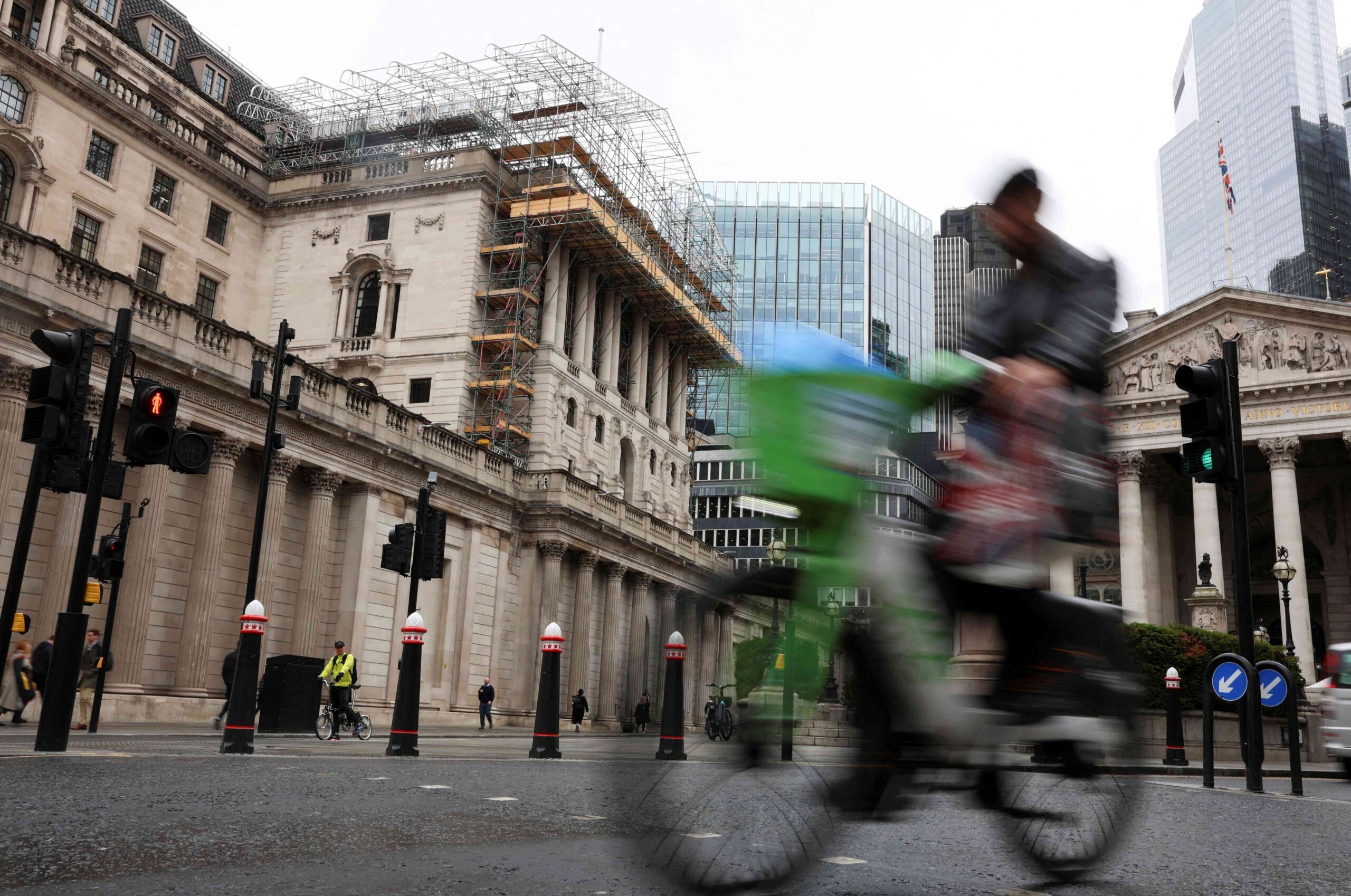
The Bank of England looks on course to keep interest rates unchanged at 3.75% later on Thursday as it assesses what a tentative truce in the Iran war means for inflation.
Even before the outlines of a deal emerged late last week, Governor Andrew Bailey said the BoE had time to wait and was in a different position than the European Central Bank, which last week raised interest rates for the first time since 2023.
However, analysts will be closely watching for dissent on the nine-member Monetary Policy Committee, where external member Megan Greene is seen as the likeliest to join Chief Economist Huw Pill in voting for a quarter-point rate rise.
Action sooner rather than later — maybe within weeks — was needed to bolster public confidence that the BoE was one step ahead of price rises, Greene said earlier this month, shortly before BoE data showed household inflation expectations had risen to a record high.
“Even if everybody was convinced that … oil continues to fall from here, I think the ones that are concerned about second-round (inflation) effects probably think those are already making their way into the system and want to jump ahead of those and kill them off,” said Gordon Shannon, a partner at TwentyFour Asset Management.
UK INFLATION SURPRISED TO DOWNSIDE IN MAY
Other members of the MPC are likely to be buoyed by data on Wednesday that showed inflation unexpectedly stayed at a 13-month low of 2.8% in May, when a dip in food prices offset rising airfares and petrol prices.
Britain’s economy shrank 0.1% in April and labour market data at 0600 GMT is forecast to show continued weakness.
A Reuters poll last week showed most economists do not expect a rate rise this year, while financial markets expect only one quarter-point hike, compared with expectations of two cuts before the Iran conflict and as many as four hikes soon after it began.
In comparison, projections from the Federal Reserve, after the first meeting chaired by Kevin Warsh, showed nine Fed officials now anticipate a rate hike by the end of 2026, while its policy statement removed language that flagged a possible reduction in borrowing costs.
COST OF LIVING CASTS POLITICAL SHADOW
A series of shocks since the end of the COVID-19 pandemic — most notably the jump in natural gas prices caused by Russia’s 2022 invasion of Ukraine — mean British inflation has spent little time near the BoE’s 2% target.
The rising cost of living has been a key factor behind many Britons’ dissatisfaction with mainstream politicians.
Prime Minister Keir Starmer’s popularity has plummeted since he won a sweeping election victory two years ago, and he faces a potential leadership challenge if Greater Manchester Mayor Andy Burnham wins a parliamentary seat in a by-election on Thursday.
In April, the BoE forecast inflation was likely to reach 3.6%-3.7% in the final quarter of this year under its two milder scenarios, where energy prices fall and there is limited pass-through of higher costs by businesses.
But it said inflation could top 6% early next year under a darker scenario where a lengthy conflict boosted energy prices further and businesses did not absorb higher costs.
While that scenario looks less probable, the BoE has been wrongfooted by the persistence of inflation before and economists expect it to keep stressing that it is ready to act swiftly if second-round effects look likely to emerge.
“The MPC as a whole will not want to close the door to potential rate rises over the coming months. But if the Strait of Hormuz does open shortly … and if broader price pressures remain fairly contained, it’s possible that the BoE will be able to avoid raising rates at all,” HSBC economist Chris Hare said.
(Reporting by David Milliken)