In the heart of China’s ancient “Porcelain Capital,” 25-year-old Pakistani Hassan Ahmad is conducting a live stream, displaying intricate ceramic plates. Far beyond just a seller, he views himself as a cultural ambassador, introducing Jingdezhen’s timeless craftsmanship to global audiences.
Through platforms like TikTok, this once-quiet inland city is reclaiming its place as a global trendsetter in ceramics, with over 2,000 local merchants now exporting to 65 countries and regions.
China’s central regions, which include Jiangxi Province — home to the “Porcelain Capital” — along with Henan, Hubei, Hunan, Anhui and Shanxi, have been actively exploring growth strategies to overcome the challenges that come with their inland locations.
INDUSTRIAL CLUSTERS SPARK NEW GROWTH
In De’an County, Jiangxi Province, Jiangxi EYan Textile Group from south China’s Foshan City has set up a smart factory powered by 5G technology, spearheading the digital transformation of the textile industry.
The 3,500-square-meter facility features a nearly fully automated warehouse, where fabric rolls are automatically stored and retrieved around the clock through a vast array of shelving.
Liu Zhuhui, who works with the company, said they are now collaborating with the Jiangxi Textile and Garment Industry Research Institute to create a model factory with full 5G connectivity.
Located near major economic hubs like the Yangtze River Delta and the Guangdong-Hong Kong-Macao Greater Bay Area, the central China region is home to over 700 universities and 82,500 high-tech firms, providing a wealth of resources for technological innovation.
According to Peng Diyun, a professor of economic management at Nanchang University, the region has developed a modern industrial system centered on advanced manufacturing, supported by a large consumer market, abundant labor and educational resources, and extensive transportation networks.
In recent years, Peng said the six central provinces have absorbed industrial transfers from coastal regions and implemented policies to encourage companies to transform and upgrade.
Henan, for example, is prioritizing innovation with plans to develop major industrial chains and advanced manufacturing clusters. Hubei is pushing forward with new industrialization, while Hunan is upgrading traditional industries and fostering new ones like digital tech.
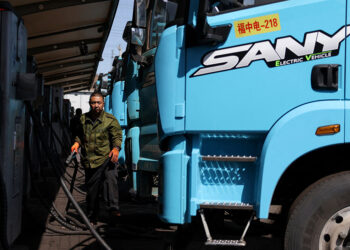
Green industries such as new energy vehicles and lithium batteries are driving central regions’ high-quality growth.
In the first half of the year, the production growth rate of new energy vehicles in Henan, Anhui, Hubei and Jiangxi all exceeded 50 percent while Hunan’s new energy vehicle exports were up 147.6 percent. Shanxi, a major coal producer, has been shifting towards green mining and new energy since 2019. Its photovoltaic and wind power sectors each generated 20 billion yuan (about 2.83 billion U.S. dollars) in revenue in 2023, with the year-on-year growth rates of both sectors exceeding 40 percent.
EFFECTIVE STRATEGIES FOR CENTRAL REGIONS’ GROWTH CHALLENGES
Amidst the rumble of freight trains in Henan Province, a quiet shift is unfolding. China-Europe freight trains from Zhengzhou, the provincial capital, have surged, exceeding 1,000 in the first seven months, up 20 percent compared with the same period last year.
Li Qiang with the Zhengzhou bureau of China State Railway Group Co., Ltd., noted that the service has now exceeded 10,000 train operations. This expansive network covers more than half of China’s provincial-level regions.
Yet it’s not just about numbers; these trains, dubbed “steel camels,” are weaving connections across Eurasia, transforming central China from a traditional inland hub into a pivotal player on the global trade.
China’s central regions are not alone in their efforts to overcome the challenges of being inland. Globally, many countries face similar difficulties in their interior regions.
For example, the United States has concentrated populations and industries on its coasts, leaving its central regions comparatively underdeveloped. Similarly, central areas in countries like France, Brazil and Russia are often reliant on traditional agriculture and resource extraction, resulting in relatively slower economic growth.
Qin Zunwen, vice president of the China Society of Urban Economy, explained that the strategy of the rising of China’s central regions, implemented over the past 20 years, has drawn lessons from Western countries like the United States and Germany. In particular, it has looked at ways to improve infrastructure such as railways and canals to connect central and coastal areas, reducing transportation costs, and fostering industry development. However, China’s approach to solving the growth challenges also has its own unique characteristics.
China has emphasized balanced regional development by leveraging the central regions’ advantages, such as lower land and labor costs, and guiding the orderly transfer of coastal industries inland through policy implementation and market-driven decisions. This has helped central China establish comprehensive industrial chains and attract population inflows, Qin added.
Industrial transfer and innovation-driven transformation are progressing hand in hand. Peng noted that China has embraced innovation to guide the central regions in harnessing their latecomer advantage to cultivate emerging industries. This “green rise,” involving strategy, management, industry and urbanization, is essential for overcoming regional challenges worldwide.
In 2023, China’s central regions produced 202.97 million tonnes of grain, accounting for 29.2 percent of the national total. The regions’ manufacturing value-added reached 6.8 trillion yuan, roughly one-fifth of the national total, with a gross regional product nearing 27 trillion yuan, representing over one-fifth of the country’s economy.
“China excels in leveraging national strategies to address the challenges facing its central regions by setting clear strategic goals and development plans and implementing strong, coordinated policies that drive cross-regional collaboration. This allows the central regions to fully utilize its comparative advantages within the broader national development framework,” Qin said.
(Source: Xinhua)