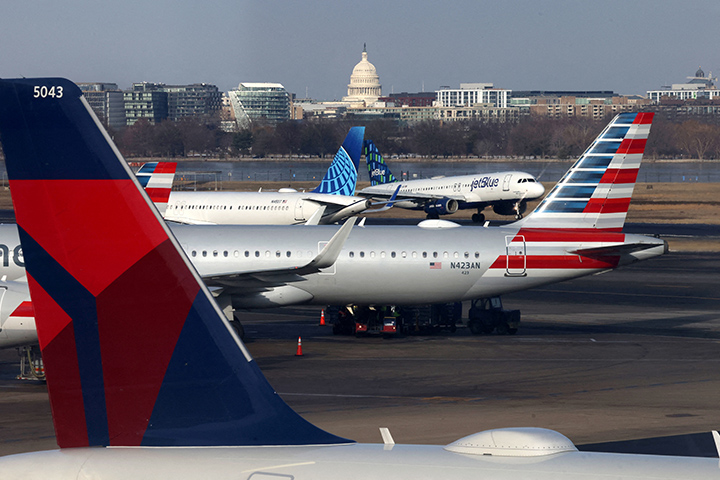
U.S. airline chiefs are talking about the U.S.-Israeli war on Iran in a way that many of their counterparts overseas are not — projecting confidence about fares and demand even as fuel costs surge and global aviation is disrupted.
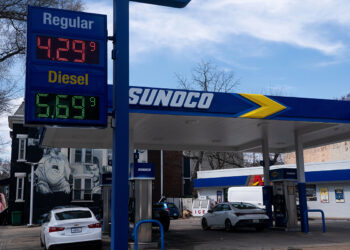
For the biggest U.S. carriers, which do not hedge against oil price rises, the shock is showing up mainly in the fuel bill, with jet fuel prices nearly doubling since the conflict began in late February.
For many airlines in Europe and Asia, it is also disrupting schedules, complicating operations and clouding outlooks even as they raise surcharges or fares.
Major U.S. carriers this week pointed to resilient demand at an industry conference, with United Airlines CEO Scott Kirby saying the revenue environment was “really strong”.
“We have a goal this year to fully offset the increase in fuel prices,” he said on Tuesday, adding fares booked over the past week were up 15% to 20% and that airlines could, for now, recover “100%” of the fuel price increase.
United has also trimmed weaker flights, such as some midweek, Saturday and overnight services as the airline would rather leave some demand unmet than keep flying routes that lose money if fuel stays high, Kirby said.
Delta Air Lines also said it has the flexibility to cut capacity if fuel prices stay elevated.
American Airlines and Delta both raised their quarterly revenue outlooks this week, despite each flagging a roughly $400 million first-quarter hit from higher fuel prices. Southwest Airlines forecast meaningful margin expansion for the year.
But the strength in U.S. demand is partly flattered by an unusually weak comparison base after travel demand last year abruptly froze and bookings plunged when President Donald Trump unveiled sweeping tariffs, prompting most airlines to withdraw their guidance.
Part of the confidence also reflects how tight the U.S. market already was before fuel prices surged. Low-cost carriers had already been trimming routes, grounding aircraft and slowing growth after a prolonged stretch of weak profits.
U.S. airlines plan to add 2.8% more seats in the second quarter of 2026, but that includes a 10% capacity cut by ultra-low-cost carriers, according to TD Cowen. That is removing some of the cheapest seats from the market and giving the largest airlines more room to raise prices without triggering a broader fare war.
DIFFERENT PRESSURES
Across many airlines in Europe and Asia, the tone has been more cautious.
Germany’s Lufthansa said its 2026 outlook was unclear because of geopolitical uncertainty. Hungary’s Wizz Air warned the Middle East conflict would dent net profit in fiscal 2026. Air New Zealand suspended its full-year earnings outlook and said it would cut about 5% of flights through early May.
For some of those carriers, the war is not just a fuel story but an operational one. Their networks run closer to the conflict zone, leaving them more exposed to airspace closures, reroutings and demand uncertainty, though Asia-Europe fares have surged in the short term due to the loss of Gulf capacity.
Air France-KLM has warned of higher costs and complexity from reroutings. British Airways has extended its temporary reduction in flight schedules across the Middle East. Scandinavian airline SAS said it would cancel 1,000 flights in April.
Analysts are largely backing the more confident U.S. view. Melius Research said carriers had already pushed through two fare increases of about $10 each way and that the demand environment could support a further 5% to 7% increase.
TD Cowen on Wednesday raised its 2026 earnings estimates for the six largest U.S. carriers, citing resilient demand and a stronger-than-expected ability to raise fares to cover higher fuel costs.
LIMITS TO PRICING
While some travelers hurried to book flights earlier than usual to avoid higher fares, U.S. airline executives said booking patterns were largely normal during the March quarter.
Delta executives described the demand strength as a normalization and recovery, rather than fear-driven or urgency-led buying. That confidence could still be tested if the conflict drags on and higher energy costs begin to squeeze household budgets and business spending.
For now, though, demand has held up better at the large U.S. carriers in part because they rely more heavily on premium travelers, corporate accounts and loyalty program members, who are typically slower to cut back when fares rise.
Delta CEO Ed Bastian said the U.S. economy has remained healthy at the high end, which he described as Delta’s core customer base, helping sustain demand despite the uncertainty.
Delta said it had seen only a modest decline in Europe-origin bookings since the war began, even as U.S. demand for Europe remained strong. “When you got a war in your backyard, people tend to stay home,” Bastian said.
(Reporting by Rajesh Kumar Singh)