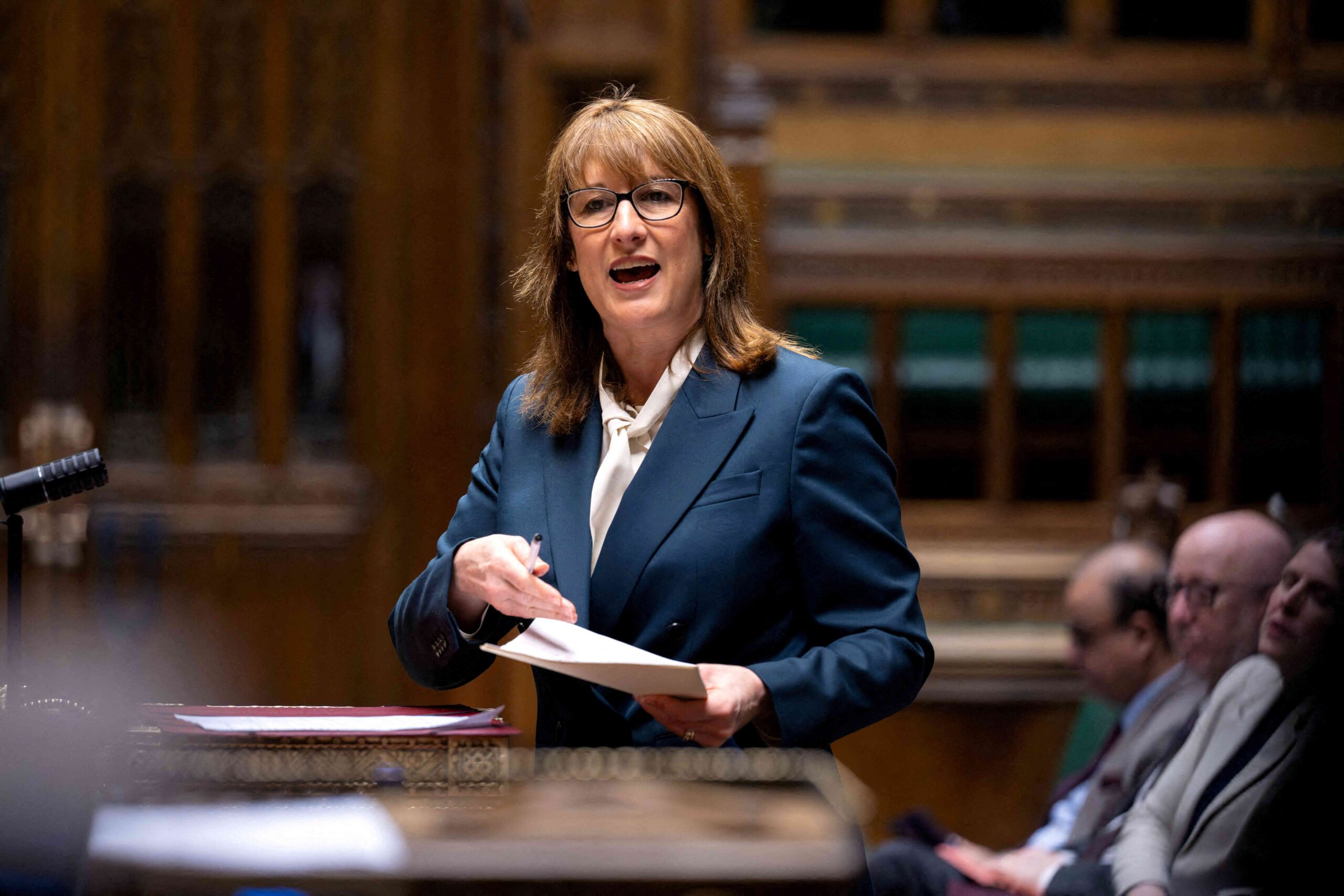
British finance minister Rachel Reeves will set out her approach to helping businesses struggling with high energy prices later this week in the wake of the ongoing conflict in Iran, she said in a piece in the Sunday Times newspaper.
Britain is exposed to the economic fallout nL1N40B0B5 from the war, and Reeves has voiced frustration nS8N3YU00A over the lack of a plan from the U.S. and Israel to deal with Iran’s closure of the Strait of Hormuz – a vital waterway for crude oil markets.
The government has waited to see how the conflict evolves before giving broad-based support to households and businesses, but, as talks in Pakistan over a peace deal ended without agreement nL1N40U07M, Reeves said she would announce more details on how businesses could be helped with costs.
The government previously pledged to cut some green levies nL1N3SQ082 and lower bills for some electricity-intensive firms, but Reeves said that nevertheless the “UK’s manufacturing sector… has faced uncompetitive energy prices for too long.”
“So later this week I will be setting out the next phase of our plans to boost Britain’s competitiveness,” she wrote in the Sunday Times. “I will also set out the principles that will guide how we support businesses in the months ahead.”
Reeves will head to International Monetary Fund (IMF) meetings in Washington this week, where she said she would discuss how to guarantee freedom of navigation in the Strait of Hormuz with allies.
“The war in Iran will come at a cost to British families and business,” she said. “We don’t yet know the full scale of those costs, but the immediate priority must be to ensure that the ceasefire holds.”
Reeves has previously said that any support on household bills, which are expected to rise in July, would be targeted nL8N40K0B1 and based on household income.
(Reporting by Alistair Smout)