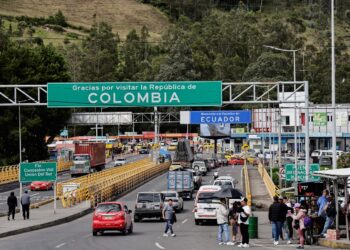
Donald Trump’s victory in the race to become the next U.S. president will have economic consequences for the rest of the world that are likely to be deep and quite immediate.
If Trump enacts just a fraction of his pledges – from higher trade tariffs to deregulation, more oil drilling and more demands on America’s NATO partners – the strain on government finances, inflation, economic growth and interest rates will be felt in every corner of the world.
Trump recaptured the White House on Wednesday by securing more than the 270 Electoral College votes needed to win the presidency, Edison Research projected.
His Republican Party also secured the Senate and may even win the House of Representatives, which would make it easier for the president to legislate his proposals and push through key appointments.
“Trump’s fiscal pledges are seriously troublesome – for the U.S. economy and for global financial markets – as they promise to vastly expand an already excessive deficit at the same time as he threatens to undermine key institutions,” Erik Nielsen, UniCredit’s Group Chief Economics Advisor, said.
“One must conclude that Trump poses a serious – and so far vastly under-appreciated – threat to the U.S. Treasury market and thereby to global financial stability,” Nielsen said.
Import duties, including a 10% universal tariff on imports from all foreign countries and a 60% tariff on imports from China, are a key plank of Trump’s policies and likely to have the biggest global impact.
Tariffs inhibit global trade, lower growth for exporters, and weigh on public finances for all parties involved. They are likely to raise inflation in the United States, forcing the U.S. Federal Reserve to act with tighter monetary policy.
The International Monetary Fund has already characterised global growth as weak, with most nations producing “feeble” expansion. A further hit to global trade is likely to present a downside risk to its 3.2% GDP growth projection for next year.
Firms mostly pass import costs onto the customer, so tariffs are likely to be inflationary for U.S. buyers, forcing the Fed to keep interest rates high for longer or to even reverse course and hike borrowing costs once again.
This will be even more likely if Trump keeps his spending and tax pledges, which could increase the U.S. debt by $7.75 trillion through 2035, according to the non-partisan Committee for a Responsible Federal Budget.
“Most damage would be done under a universal import tariff,” ABN Amro’s Rogier Quaedvlieg said. “If the ultimate implementation is non-universal, the hit to the global economy would be significantly weaker.
“The full Trump package, including a universal package, would likely hit the global economy hard.”
CHINA, MEXICO IN CROSSHAIRS
For emerging markets relying on dollar funding, such a policy mix will make borrowing more expensive, dealing a double blow on top of the lost exports.
The same forces that could push up U.S. inflation could weigh on prices elsewhere, especially if Trump slaps oversized duties on China as he has promised.
As the world’s largest exporter, China is desperate to resurrect growth, so it may seek new markets for goods squeezed out of the U.S. and dump products elsewhere, especially Europe.
Central banks are likely to react quickly as business sentiment, especially for trade-reliant open economies, will deteriorate quickly.
“Even before a fall in the surveys, the ECB could be tempted to accelerate its rate cuts to a 2% neutral rate and, once the U.S. tariff policies become clearer, it would be reasonable to cut rates to below neutral,” JP Morgan’s Greg Fuzesi said.
Governments are also likely to retaliate against any U.S. import duty, inhibiting trade further and cutting deeper into global growth.
High Fed rates and lower borrowing costs elsewhere would also boost the dollar – as evidenced by the 1.5% drop in the value of the euro and the yen overnight – dealing even more pain to emerging markets since over 60% of international debt is denominated in dollars.
Mexico could be the hardest hit given Trump’s rhetoric on closing the border, which comes against an already deteriorating domestic outlook.
“Mexico is most at risk,” TS Lombard’s Jon Harrison said as the Mexican peso fell 3% against the dollar.
Mexico is especially vulnerable because trade tensions and threats of deportations could exacerbate domestic problems like cartel activity and the government’s failure to curb violence, Harrison added.
Among potential winners, Brazil might enjoy greater trade with China given that Beijing replaced all its U.S. soybean imports with Brazilian ones when trade tensions flared during Trump’s first presidency.
But Europe could also suffer the added blow of increased defence costs if Trump reduces support for NATO.
The continent has relied on a U.S. military presence since the end of World War Two and with no end in sight to Russia’s war in Ukraine, Europe will be forced to fill any gap left by a U.S. retreat.
But government debt in Europe is already close to 90% of GDP, so finances are stretched and governments will struggle to stimulate an economy suffering from trade barriers while funding military spending at the same time.
Trump’s deregulation efforts are likely to play out over a longer period but internationally-agreed proposals aimed at making banks more resilient, commonly known as Basel III, could be a first casualty.
The new rules are set to apply from Jan. 1 and policymakers are already debating whether they should go ahead even if the U.S. pulls out.
(Editing by Mark John and Catherine Evans)