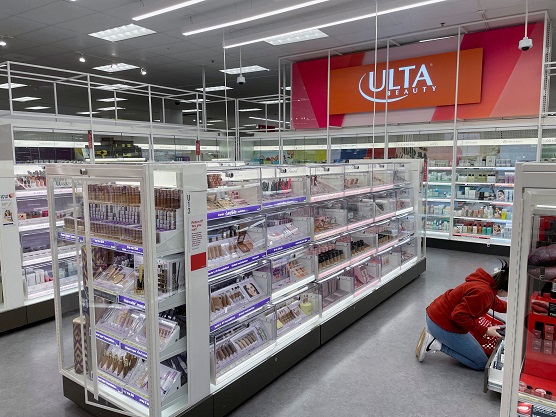
John Hamer, president of Rodgers Wade Manufacturing in Paris, Texas, makes store fixtures for big retailers like Ross Dress for Less and Ulta Beauty.
He sources many of the goods from China, which until recently meant he paid 70% in tariffs on metal fixtures.
“The media was saying it was 30%, but that was never true,” he said, referring to the tariff rate for China announced in May as part of a truce between the Trump administration and Beijing as it negotiated a broader deal.
That’s because Hamer’s 30% tariff was stacked on top of existing tariffs, including a tariff on Chinese steel products that varies depending on the amount of steel used in a fixture.
When U.S. President Donald Trump adds a new tariff the old ones don’t go away. Some companies will pay far more because of a phenomenon called tariff stacking, the latest complication for U.S. importers trying to navigate Trump’s on-again, off-again trade war.
The reality for many U.S. businesses is that their tariff bills are often far higher than the headline number touted in trade talks.
Tariff stacking applies to any country exporting to the U.S., but the most extreme cases tend to be with China, where the U.S. has accumulated a long list of sometimes hefty existing tariffs, implemented under different provisions of U.S. trade law.
The latest twist is an announcement that the two sides have agreed to a 55% tariff, but that’s in part only an estimate of what the average pre-existing tariffs were. Hamer isn’t sure what his tariff total will be now, but he figures it couldn’t get much worse.
“Hopefully this will bring the (tariff) number down – and some of the clients who’ve been sitting on the sidelines will go ahead and place orders,” he said, “because it’s been all over the map.”
‘HERE’S THE TARIFF BILL’
Hamer is searching for suppliers outside China to avoid his stacked tariffs. He’s checked Mexico and is planning a trip to India next month as part of the effort. In the meantime, he is passing through all the tariffs.
“The customers pay the tariff,” said Hamer. “When it comes in, we say, ‘Here’s the tariff bill.'”
Many businesses are still hoping for a reprieve from President Donald Trump’s trade war. Federal courts, including the U.S. Court of International Trade, have ruled that Trump’s imposition of tariffs exceeded his authority. A federal appeals court is considering the administration’s appeal to that ruling, and the tariffs remain in effect while that plays out, a process expected to take months.
Some are counting on tariff exemptions, a popular tool used by companies during the first Trump administration to get goods imported without the taxes.
Michael Wieder, president of Lalo Baby Products in Brooklyn, is one of them. “We believe there should be an exemption for baby products,” he said. “Same with toys.”
The Trump administration has said it will resist creating such carve-outs. And even during the last trade war, it was a complex process. For instance, Lalo imports a “play table” from China that happens to be classified under a customs category that was subject to a 25% tariff under a part of trade law that aims to fight unfair trade practices. So Wieder has been paying 55% tariffs on those, thanks to stacking.
Trump campaigned on a vow to use tariffs to pull manufacturing back to U.S. shores and collect revenue to help fund a major tax cut. His battle with China quickly spiraled into a conflagration with the U.S. imposing a 145% across-the-board tariff that shut down much of the trade between the world’s two largest economies.
The agreement to curb the tariffs is part of a larger effort to negotiate individual deals with most of the U.S.’s trading partners.
PASSING COSTS THROUGH
On Wednesday, a White House official said the 55% figure represents a sum of a baseline 10% “reciprocal” tariff Trump has imposed on goods from nearly all U.S. trading partners; 20% on all Chinese imports because of punitive measures Trump has imposed on China, Mexico and Canada associated with his accusation that the three facilitate the flow of the opioid fentanyl into the U.S.; and finally pre-existing 25% levies on imports from China that were put in place during Trump’s first term.
“It sounds like that’s the way he’s thinking of the baseline – 55% – at least for some products,” said Greta Peisch, a trade lawyer at Wiley Rein in Washington.
Ramon van Meer’s business selling filtered shower heads from China may yet survive the trade war, though he’s not certain.
That depends entirely on whether he can can manage the multiple tariffs placed on his $159 shower heads, which became a viral sensation on Instagram.
When the Trump administration trimmed tariffs on China to 30% in May, van Meer’s tariff bill was actually 43%. That’s because the 30% tariff was stacked on top of an existing 13% tariff.
It’s an improvement over the 145% tariffs slapped on Chinese imports in April, when he halted shipments entirely.
“At least I can afford to pay it,” said van Meer, chief executive of Afina, based in Austin, Texas, referring to his latest calculations. “And I don’t have to raise the price by that much.”
(Reporting by Timothy Aeppel in New York)