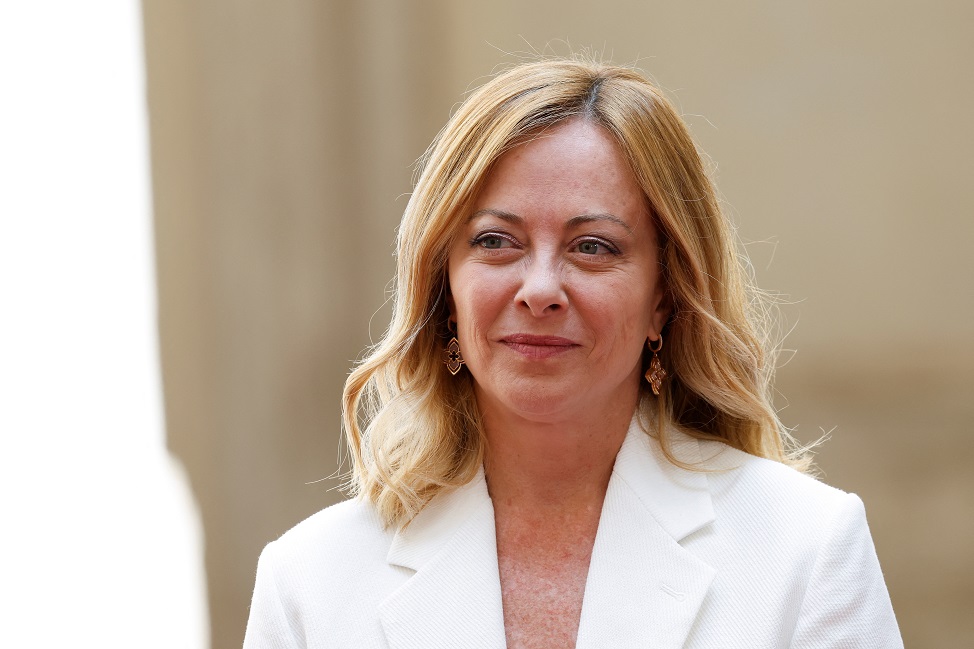
Italy will comply with a new NATO spending target of 5% of gross domestic product on defence and security, Prime Minister Giorgia Meloni said on Monday, but it will take 10 years to do so and wants changes to EU budget rules in order to make it possible.
A NATO summit this week is expected to push the alliance’s members to boost defence spending to 3.5% of GDP from the current 2% and commit a further 1.5% to broader security-related spending, meeting U.S. President Donald Trump’s demand for a 5% overall target.
Meloni said highly-indebted Italy had managed to ensure that each country could stipulate what constitutes spending on security, leaving some leeway on a contentious issue.
“These are important commitments that Italy intends to honour. We will not leave our country weak and unable to defend itself,” Meloni told lawmakers ahead of NATO and EU summits, respectively scheduled for June 24-25 and June 26-27.
Meloni said Italy would reach the old NATO 2% of GDP defence spending target this year, adding it would have 10 years until 2035 to increase it by a further 1.5 percentage points.
Pressed to boost Italy’s defence budget while minimising any impact on its strained public finances, Meloni said she had secured that no minimum annual spending increase would be required.
“As for the 1.5% of GDP spending on security, we obtained that member states define what they consider a threat to the security of their citizens and what tools they should deploy to address that threat, and consequently what expenditure should be made,” the Italian prime minister added.
Meloni, however, said European Union authorities should review the bloc’s budget rules to make them consistent with increased defence spending agreed with NATO allies, echoing comments by Economy Minister Giancarlo Giorgetti last week.
Brussels has proposed allowing member states to raise defence spending by 1.5% of GDP each year for four years without any disciplinary steps that would normally kick in once a deficit is more than 3% of GDP.
Italy, whose deficit last year stood at 3.4% of GDP, is reluctant to use the EU flexibility clause because it would keep Rome under an infringement procedure opened by the EU last year.
“We believe there is no need to activate the EU clause, at least for the 2026 budget,” Meloni said.
Italy, which pledged to cut its deficit to 3.3% of GDP this year and to 2.8% in 2026, is also wary of any move that could harm its improving reputation on financial markets, government officials said.
(Reporting by Giuseppe Fonte)