A U.N. push for investment to protect the world’s oceans yielded around $10 billion in deals at a conference last week, way below the estimated annual need as many investors seek clearer regulation on ocean management before committing funds.
While political leaders at the United Nations conference in Nice took steps to tackle overfishing and pollution threatening delicate ecosystems and the people who depend on them, getting countries to agree to better governance has proven tough.
Just 50 countries have so far ratified a new High Seas treaty which sets out rules agreed by more than 130 nations in 2023 to govern international waters and clamp down on harmful practices. The United States, pulled out of various climate initiatives by President Donald Trump, is among those yet to ratify the treaty.
The lack of a clear governing framework and robust ocean-related data has stymied private sector finance to date, said Oliver Withers, head of nature at British lender Standard Chartered.
“The major dynamic that doesn’t apply to terrestrial is the high seas don’t belong to any one individual sovereign,” he said. “It is a significant challenge, there is no single sovereign responsible for the high seas.”
Of the deals chalked up in France, the bulk came from public sector banks, including $2.5 billion in funding by the Development Bank of Latin America and the Caribbean (CAF) and 3 billion euros ($3.5 billion) from a group of development banks to fight plastic pollution.
While a step up, the total figure falls far short of what is needed. Between 2015 and 2019, only $10 billion was invested against the U.N. estimate of $175 billion in required annual funding.
“Public finance isn’t enough but private finance is even less. So I think it’s a space in its infancy,” said Francine Pickup, Deputy Director, Bureau for Policy and Programme Support at the U.N. Development Programme.
Pickup said improving the policy backdrop and regulation, including removing subsidies she said encouraged harmful practices such as overfishing, was key, followed by the creation of a pipeline of investments including in start-ups focused on ocean-related technology.
To date, the sector has received just a small slice of overall funds, data shared with Reuters by industry tracker Sightline Climate showed.
Between 2020 and 2025, ocean tech received just 0.4% of the $202 billion invested across all sectors during that period, although the data showed a stronger start to 2025.
“What we seek as investors is that governments and the policymakers address systemic risks,” said Robert-Alexandre Poujade, biodiversity lead at BNP Paribas Asset Management, adding he would welcome the treaty “if it has lots of teeth and enforcement mechanisms”.
Fixing the funding shortfall also requires a concerted effort by policymakers and investors to tackle overlapping challenges to protecting marine biodiversity and ocean health.
A warming planet is heating up the oceans, exacerbating effects such as water acidification and coral bleaching that climate scientists say will be improved if the world manages to cut carbon emissions as planned.
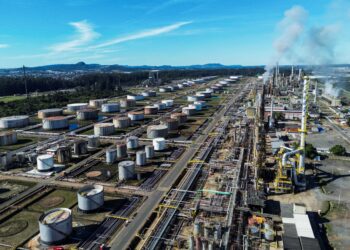
Overfishing and polluting sea vessels, offshore oil drilling and, potentially, deep-sea mining that collectively damage ocean health also require firmer policy action, scientists, ocean experts and investors say.
While action has hitherto been slow, there were signs of progress in Nice, as more than 20 countries backed a call by France to prevent deep sea mining; and a number of fresh Marine Protected Areas were created.
“In a sense the ocean is the last area that we have been pillaging without thinking about tomorrow,” said Flavien Jouber, Seychelles’ minister for agriculture climate change and environment, describing it as a “sense of free-for-all”.
($1 = 0.8693 euros)
(Reporting by Simon Jessop, Virginia Furnsess and Kate Abnett)