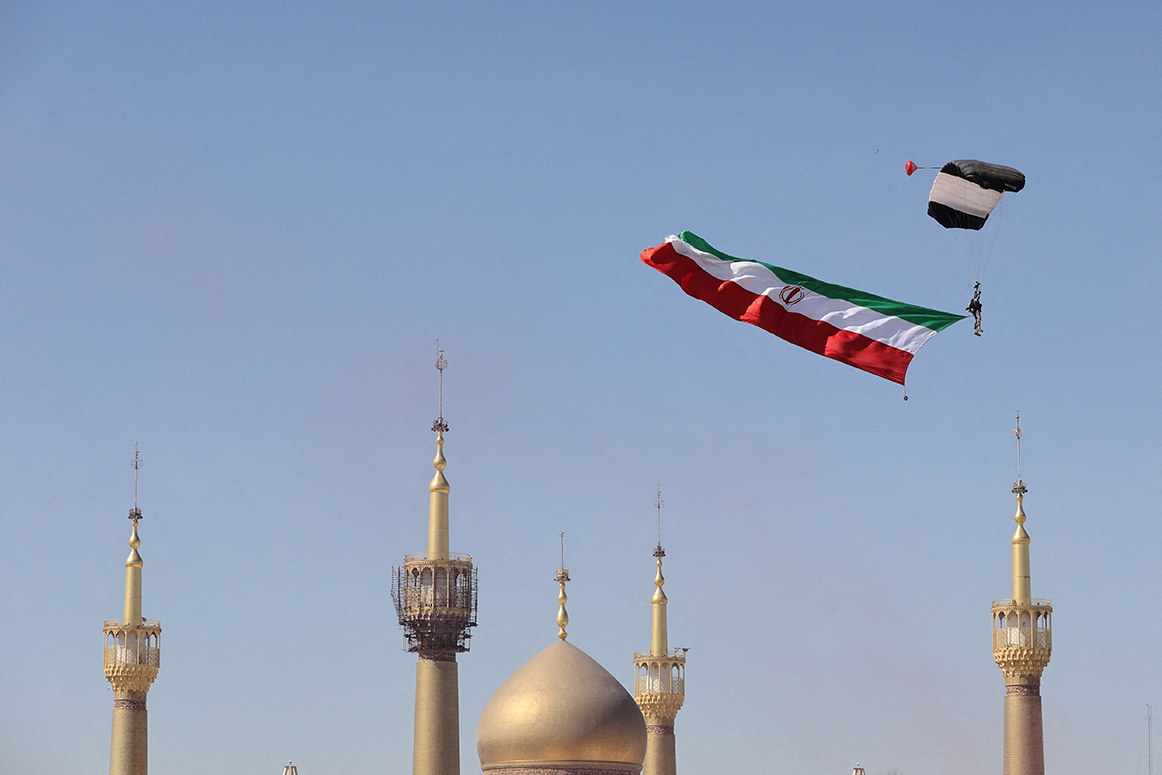
At previous moments of tension over decades of rivalry with Western foes, Iran was able to project power across the Middle East using a network of close allies that meant any strikes against it threatened to trigger a formidable response.
Now, with talks deadlocked over its nuclear programme and U.S. President Donald Trump saying an Israeli strike on Iran “could very well happen,” Tehran must face a fresh crisis with those capabilities greatly diminished.
The United States killed the mastermind of Iran’s regional network in 2020 and since the war in Gaza began 20 months ago, Israel has hammered Tehran’s closest ally Hezbollah while rebels ousted its main regional partner, Syria’s President Bashar al-Assad.
Here is how Iran built up its “Axis of Resistance”, how that network has come undone, and the regional resources Tehran can still count on.
HOW DID IRAN BUILD UP SUCH A WIDE REGIONAL NETWORK?
Iran spent decades after its 1979 Islamic Revolution developing a network of allies across the Middle East that accepted Tehran’s leadership and shared its regional vision of fighting what they described as Western imperialism.
This “Axis of Resistance”, as it was dubbed, drew on the appeal of Iran’s revolutionary theocratic ideas to traditionally marginalised fellow Shi’ite Muslims across the region, and on its staunch support for Palestinian nationalism.
It grew to include Hezbollah in Lebanon, President Bashar al-Assad’s government in Syria, Shi’ite Muslim armed groups in Iraq, the Houthis in Yemen and the Palestinian militant group Hamas – extending Iran’s influence to both the Mediterranean and Red Sea.
The Islamic Revolutionary Guards Corps and its elite Quds Force lay at the heart of the axis. The IRGC answers to the Supreme Leader Ayatollah Ali Khamenei and was set up soon after the revolution as an ideologically committed counterweight to the regular armed forces.
The Quds Force operates as the IRGC’s overseas wing, working closely with allies in the Axis of Resistance to train and arm them, and to provide direction and guidance in their military operations.
Its tough, shrewd commander Major-General Qassem Soleimani was killed by a U.S. drone attack in Iraq in 2020 after decades spent knitting together groups across the region and Iran has struggled to replace him.
WHY HAVE KEY PARTS OF IRAN’S NETWORK CRUMBLED?
When Hamas attacked Israeli communities on October 7, 2023, it triggered massive military retaliation that has killed much of the group’s top leadership including political chief Ismail Haniyeh, who was assassinated in Tehran last summer.
Hamas is still fighting in Gaza and retains a significant presence in the Israeli-occupied West Bank, but it does not presently boast a military force capable of posing a realistic threat to Israel.
The war quickly spread as Iran’s most important regional ally Hezbollah fired on Israel from Lebanon in solidarity with Palestinians in Gaza, leading to months of cross-border fire between the group and Israel.
That conflict suddenly escalated in September 2024 when Israel detonated thousands of booby-trapped pagers used by Hezbollah operatives, killing and maiming hundreds of them.
Over the following weeks a string of Israeli airstrikes killed Hezbollah’s top leadership including overall chief Sayyed Hassan Nasrallah, dealing the group a stunning blow and revealing how far it had been infiltrated.
Hezbollah accepted a ceasefire with Israel in November and remains far from the powerful organisation that once threatened Israeli security.
Syria’s Assad was ousted soon afterwards. Israel had targeted top Iranian commanders in Syria with airstrikes over the summer, causing a partial IRGC pullout. Without Iranian and Hezbollah support, and ally Russia bogged down with war in Ukraine, Assad’s army crumbled when rebels mounted an offensive in late November and he fled in December.
WHAT REMAINS OF THE AXIS OF RESISTANCE?
With Hamas and Hezbollah greatly weakened, Iran can still turn to the Shi’ite militias it supports in Iraq and to the Houthis in Yemen.
Iraq has a constellation of Iran-aligned armed groups but just a handful count among the most loyal and powerful to Tehran, including Kataib Hezbollah and the Nujaba group.
These groups receive arms and directives from Iran and have pledged allegiance to Iran’s supreme leader but retain a degree of autonomy on their operations inside Iraq. They have all but ceased attacks targeting U.S. forces and Israel since last year.
Analysts question how far they would go to protect Iran if an attack was aimed at its nuclear sites rather than as part of an effort to topple the Islamic Republic given that would pose an existential threat to their main source of support.
The Houthis have continued to fire missiles at Israel, but their ability to pose a significant threat from their distant base in Yemen is in doubt. Their attacks on Red Sea shipping have cooled since striking a deal with the U.S. after weeks of bombings in the spring.
(Writing by Angus McDowal)