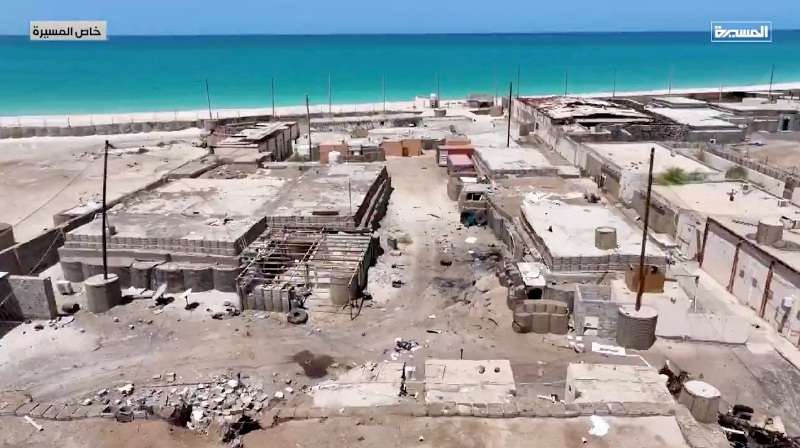
The Houthi capture of Yemen’s Red Sea coastline is reshaping the balance of power in the Gulf, strengthening Iran’s hand and confronting Saudi Arabia and its neighbours with a difficult choice: absorb mounting costs or seek accommodation with Tehran.
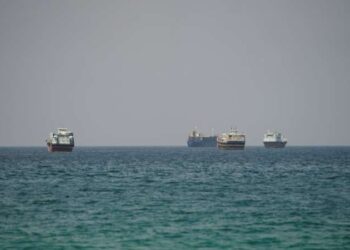
By securing a position overlooking Bab el-Mandeb, one of the world’s most important shipping arteries, the Iran-aligned group has opened a second pressure point, threatening the Saudi oil exports diverted from the Strait of Hormuz.
The calculation, according to regional officials and analysts, is straightforward: by threatening Red Sea shipping while Iran chokes off Hormuz, Tehran and the Houthis can raise oil prices and fuel inflation while narrowing the region’s prospects of relying on Washington to resolve the crisis.
The strategy, they say, is designed to force a stark choice on Gulf states: put up with growing economic pain from the squeeze on their oil exports and Iranian strikes or engage with Iran to protect trade, energy flows and economic stability.
“The Houthi capture of strategic islands near Bab el-Mandeb is a game changer,” said Middle East analyst Fawaz Gerges. “It changes the balance of power and gives them far greater geopolitical and geoeconomic leverage over Saudi Arabia, the Gulf, the United States and global trade.”
GULF STATES TO JOIN OMAN-IRAN MEETING ON STRAIT OF HORMUZ
Riyadh rerouted much of its crude through Red Sea ports since the war effectively closed the Strait on the opposite side of the Arabian Peninsula, but on Friday it closed the pipeline that carried the oil after it came under attack.
Trump’s reported refusal to agree to a Saudi request for the U.S. to strike the Houthis, combined with mounting economic costs, is reinforcing a view in some Gulf capitals that negotiations with Tehran are no longer a choice but a necessity for self-preservation, regional sources told
Reporters.
A meeting in Oman on Monday between Gulf Arab foreign ministers and their Iranian counterpart, Abbas Araqchi, to discuss a possible arrangement on the Strait of Hormuz has been postponed due to disagreements over the terms of the talks, a Gulf source told
Reporters.
The gathering was part of an Omani and Iranian push to secure a temporary framework for managing shipping through the waterway, a critical artery for global oil exports.
Omani Foreign Minister Badr Albusaidi said the regional meeting scheduled for Monday in Salalah had been postponed “in the interests of consensus.”
“We remain committed to fostering dialogue that supports stability and lasting co-operation in our region,” he wrote on X, without elaborating on the reasons for the delay.
Iranian President Masoud Pezeshkian said on Sunday he had held good talks with UAE Crown Prince Sheikh Khaled bin Mohamed bin Zayed Al Nahyan in New Delhi on the sidelines of the BRICS leaders’ summit.
“We agreed to put the past aside and look forward to the future, and how we can build a future together,” he said.
The dilemma for the Gulf states is that geography is immutable. Decades of confrontation have failed to alter a simple reality: Iran’s position alongside the region’s energy and trade arteries makes it an unavoidable player in any Gulf security equation.
Whatever Gulf leaders think of the Islamic Republic, it remains a reality they cannot bypass or simply wish away and the conflict triggered by U.S. and Israeli attacks on Iran has blown apart decades of diplomatic efforts to contain it.
Asked on Sunday if he was concerned about the Gulf states meeting with Iran, U.S. President Donald Trump said that was up to them.
HOUTHI ADVANCE HIGHLIGHTS IRAN’S STEP-BY-STEP STRATEGY
Alex Vatanka of the Middle East Institute said the question for Gulf states may increasingly be less whether they trust Iran than how to protect their interests and survive hostilities Washington cannot quickly end.
That could push them towards parallel diplomacy with Tehran and, over time, a broader security strategy less dependent on the United States alone.
“The Gulf states are contemplating the basic reality that they might have to cut a deal with the Iranians on their own, regardless of whether they hurt American feelings or not, because America can’t get them out of this quagmire,” he said.
The flareup revives a struggle that long predates the U.S.-Iran conflict. The Houthis, drawn from Yemen’s Zaydi Shi’ite minority, fought a series of wars with Saudi Arabia before seizing Sanaa in 2014, prompting a Saudi-led intervention the following year.
Despite years of air strikes and cross-border warfare, they survived, expanded their capabilities and emerged as one of Iran’s most effective regional allies.
The Houthis are pursuing their own longstanding conflict with Riyadh while exploiting a position that gives them leverage far beyond Yemen’s borders to create growing value for Tehran.
“The Houthis are not traditional proxies,” said former U.S. negotiator Aaron David Miller. “They can weaponise geography and have a dramatic impact on the international economy and on the global oil economy.”
One regional official said the Houthi advance was the latest step in a careful strategy by Tehran.
“For Iran, this is a chess game. They plan what comes next. They don’t push all their buttons at the same time out of panic,” the regional official said.
“The Houthis are the only proxy Iranian ally with formidable operational capabilities left.”
Washington’s economic squeeze on Iran is having an impact, but the unintended consequence, according to a Gulf source, is that it is squeezing America’s Gulf partners into reconsidering whether confrontation with Tehran is sustainable.
(Reporting by Tuvan Gumrukcu and Timour Azhari )