The Strait of Hormuz’s closure and the resulting surge in global oil prices have handed financial windfalls to Iran, Oman and Saudi Arabia, while other states that lack alternative shipment routes have lost billions of dollars.
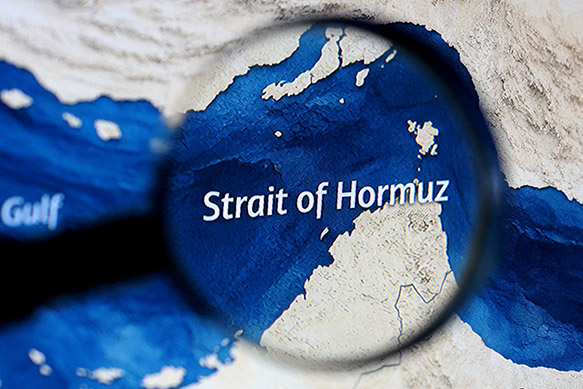
Iran effectively shut the Strait – a route for about a fifth of global oil and LNG flows – after U.S. and Israeli airstrikes on Iran at the end of February led to a widening conflict.
It later said it would allow transits by vessels that had no U.S. or Israeli links. As a result, some tankers have managed to cross the narrow waterway, but energy markets have still experienced unprecedented disruption. International Brent crude rose by 60% in March, a record monthly increase.
U.S. President Donald Trump has threatened to rain “hell” on Tehran unless it makes a deal by the end of Tuesday that would allow traffic to start moving through the Strait of Hormuz.
GEOGRAPHY DETERMINES OIL FORTUNES
While much of the world faces a surge in inflation and economic damage from the energy price rise, for the Middle Eastern oil producers, the impact has depended on their geography.
Although Iran has control over the Strait, Oman, Saudi Arabia and the United Arab Emirates can bypass it via pipelines and ports.
By contrast, oil from Iraq, Kuwait and Qatar has been trapped as the countries lack alternative routes to international markets.
Following Trump’s latest threat, an Iranian official said Iran would not open the Strait as part of a temporary ceasefire. It has rejected Trump’s previous ultimatums, saying it will not be humiliated.
Some analysts say the U.S.-Israeli war on Iran in some ways has strengthened Tehran.
“Now that Hormuz has been closed, it can be closed again and again, and that poses a major threat to the global economy,” said Neil Quilliam, associate fellow at think tank Chatham House. “The genie is out of the bottle.”
The International Energy Agency described the conflict as the world’s biggest energy supply shock yet, citing more than 12 million barrels per day of regional shut-ins and damage to about 40 energy facilities.
The analysis of March export data found Iraq and Kuwait’s estimated notional oil export revenues both plunged by about three-quarters year-on-year. Conversely, Iran’s revenues rose by 37% and Oman’s by 26%. Saudi Arabia’s oil revenues increased by 4.3%, while the UAE’s dipped by 2.6% as the price surge offset lower volumes.
The estimates use export volumes from ship-tracking firm Kpler and JODI data, where available, multiplied by average Brent prices, and compared against a year earlier. Brent was used for simplicity, even though many of these crudes are priced against other benchmarks currently trading at significant premiums to it.
SAUDI ARABIA GETS HIGHER ROYALTIES AND TAXES
For Saudi Arabia, higher prices mean increased royalties and taxes from state oil giant Aramco, which is overwhelmingly owned by the government and its sovereign wealth fund.
The uplift is particularly positive for the kingdom following heavy spending on projects designed to diversify its income away from oil that had contributed to a budget deficit.
Aramco declined to comment when asked about calculations. Representatives for the other countries or their oil companies did not immediately respond to requests for comment.
SAUDI PIPELINE WAS BUILT DURING IRAN-IRAQ WAR
The kingdom’s biggest pipeline is the 1,200-kilometre (746-mile) East‑West link, built in the 1980s during the Iran‑Iraq war to bypass Hormuz.
It connects eastern oilfields to the Red Sea port of Yanbu and is operating at its expanded 7 million barrels per day capacity.
Aramco uses about 2 million bpd domestically, leaving roughly 5 million bpd for export. Yanbu loadings averaged a near-capacity 4.6 million bpd in the week starting March 23, shipping data shows, despite attacks targeting the hub on March 19.
Overall Saudi crude exports fell 26% year-on-year in March to 4.39 million bpd, Kpler and JODI data showed. Still, higher prices increased the value of those exports by roughly $558 million from a year earlier. Riyadh had pre-emptively boosted exports in February to their highest since April 2023, in case of a U.S. attack on Iran.
Despite the advantage of the East-West link, Quilliam said Saudi Arabia remained vulnerable to further strikes by Iran or its allies in Yemen, the Houthis, against its energy infrastructure in the west and vessels passing through the Bab el-Mandeb Strait to the Red Sea.
IRAQ HAS SUFFERED THE BIGGEST DROP
The UAE has been shielded to an extent by its 1.5-1.8 million bpd Habshan‑Fujairah pipeline, which bypasses the Strait. Its estimated oil export value still fell by more than $174 million year-on-year in March. Fujairah has come under a series of attacks that led to loading halts.
Among the Gulf producers, Iraq’s revenue fell the most – plunging by 76% to $1.73 billion. Kuwait was next with a 73% fall to $864 million.
Iraq’s state oil marketer SOMO said on April 2 that March oil revenues were about $2 billion.
Both countries are likely to suffer steeper declines in April as their March revenues were improved by cargoes that managed to sail in the early days of the conflict. A tanker laden with Iraqi crude sailed through the Strait last week after Iran said Iraq would be exempt from restrictions.
Adriana Alvarado, VP of sovereign ratings at Morningstar DBRS, said Gulf governments had options to shore up their finances and could either draw on fiscal savings or go to the financial markets to issue debt.
“Apart from Bahrain, the Gulf states have enough fiscal room to deal with the shock, with government debt at moderate levels below 45% of GDP,” she added.
For the longer term, however, the impact is unclear.
Some oil companies and politicians in the West have lobbied for increased investment in fossil fuels to try to protect against supply shocks, but some analysts say renewable energy provides the best protection.
In an early indicator of how the crisis could accelerate a shift from reliance on oil, last week France’s TotalEnergies and UAE state-backed renewable energy firm Masdar announced a $2.2 billion joint venture to rapidly deploy renewable energy across nine Asian countries.
(Reporting by Ahmad Ghaddar)