As Europe’s railways buckle under record heat, roads melt and power grids strain, countries are turning to an array of fixes for ageing infrastructure, from drones inspecting tracks and AI-powered sensors to a surprisingly simple tool: white paint.
At Norway’s Oslo airport on Wednesday, with temperatures set to hit 30 degrees Celsius (86 degrees Fahrenheit), 10 C above normal for the time of year, workers doused the tarmac with water to keep it cool.
It’s a marked shift in a country more used to coping with the cold that reflects how Europe is having to adapt to rising temperatures that are stoking wildfires, causing thousands of excess deaths and putting infrastructure under growing pressure.
“In Norway, the asphalt must withstand both extreme cold and fairly warm temperatures,” said Jørn Arvid Remark, operating engineer at Norwegian state-owned airport operator Avinor, adding the airport was testing a new heat-resistant asphalt.
The fire brigade sprays around 9,000 litres of water on key parts of the runway, which can get damaged at high temperatures as it softens under the weight of aircraft.
Europe’s roads and railways, many built decades ago, are increasingly struggling to cope.
“Our infrastructure is in no way prepared for the extreme weather events that we’re going to see,” said Chris Dodwell, co-head of sustainability centre at Impax Asset Management, adding heatwaves, once rare, were becoming regular events.
A 2025 report by leading central banks estimated that severe weather events, including heatwaves, droughts and floods, could cut euro zone GDP by as much as 4.7% by 2030.
HIGHER TEMPERATURES MEAN MORE STORMS AND FLOODS
Europe’s railways have felt the impact acutely.
An EU report in April found that more than 70% of rail managers were seeing growing disruption from extreme weather. Between 2015 and 2024 weather-related interruptions amounted to the equivalent of one to three years of railway service across the region.
Heat can cause tracks to expand, and points, signals and power to fail. However, extreme weather triggered by high temperatures can be even more disruptive.
“The most critical issue for rail networks is not the heat itself, but the thunderstorms, strong winds and landslides that often follow heatwaves,” said Oliviero Baccelli, a professor at Milan’s Bocconi University.
“Italy has already experienced significant disruptions to its railway network, particularly on Alpine routes, as a result of climate-related events.”
Northern European countries such as Britain face particular challenges because much of their rail infrastructure was designed for a narrower temperature range than networks in southern Europe.
John Lawrence, chair of the IET Railway Technical Network, said many rail components and systems were “in essence frozen in time”.
He added it would be a huge cost to heat-proof entire networks, though operators were exploring more stable sleeper designs and technologies such as AI and drones to “speed up the amount of track that can be inspected and monitored”.
Britain’s Network Rail has pledged to invest £2.6 billion ($3.5 billion) between 2024 and 2029 to help its network withstand increasingly extreme weather.
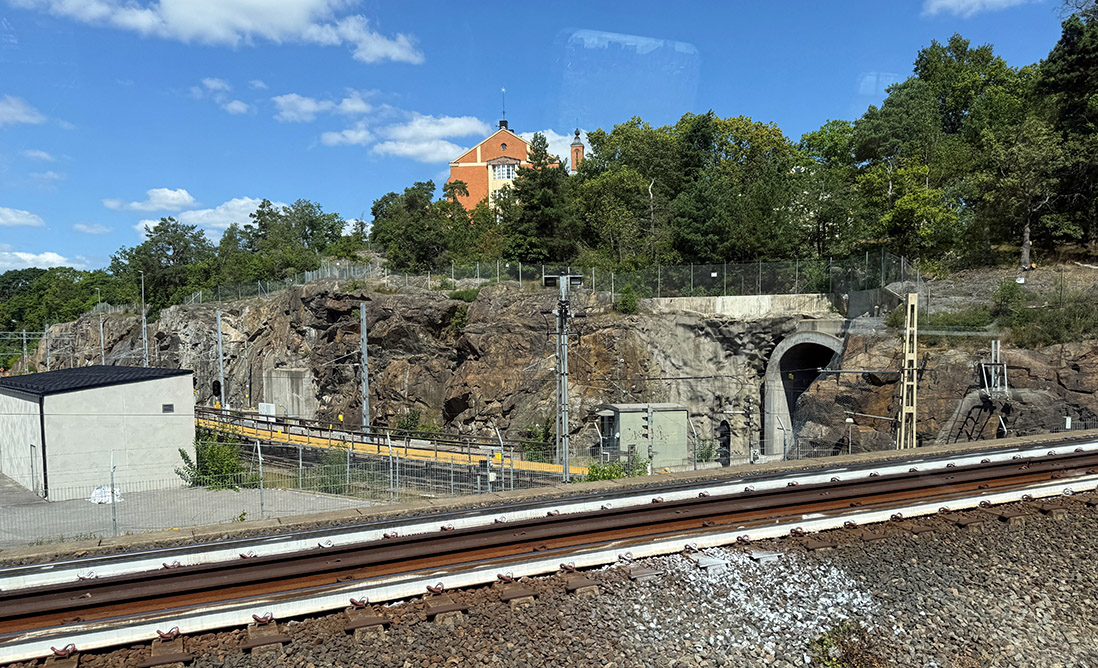
Not all solutions are hugely expensive, however, with some operators using traditional methods to reflect heat. Stockholm’s transport authority spent about 100,000 Swedish crowns ($10,300) painting sections of metro track white in May and June to reduce the risk of track buckling.
HEATWAVES ‘MORE INTENSE, MORE FREQUENT AND LONGER-LASTING’
Martin Wilson, engineering director at French rail equipment manufacturer Alstom, said Europe could learn lessons from transport systems such as the Riyadh Metro and Dubai tram, designed to operate in temperatures above 50C (122F).
“Today’s heatwaves are often more intense, more frequent and longer-lasting,” he said. “Rising temperatures are increasingly challenging rail systems across Europe.”
Roads face similar pressures.
Engineers say northern European highways were built primarily to withstand damage from freeze-thaw cycles, while southern countries such as Spain use asphalt blends better suited to prolonged summer heat.
Finding the right balance is becoming harder as countries contend with both colder winters and hotter summers.
“They may have to adjust their approach,” said José Pablo Sáez Villar of the Spanish Civil Engineers Association, referring to planners and road builders in northern Europe.
Paris transport operator RATP has created a heatwave contingency unit and is preparing a climate adaptation plan by the end of the year.
In Norway, officials say warmer, wetter weather is changing how new infrastructure is designed.
“Roads are going to be made more robust,” said Grethe Vikane, head of social development and climate at the Norwegian Public Roads Administration.
“So they can withstand both the challenges already being experienced and the consequences of expected climate change.”
($1 = 0.7460 pounds)
($1 = 9.6652 Swedish crowns)
(Reporting by Javi West Larrañaga)