In a brightly lit treatment room at a private hospital in Istanbul, doctor Erdal Dilekci makes dozens of small, quick incisions on a patient’s back as part of a centuries-old therapy known as wet cupping.
The patient, 26-year-old nurse Furkan Ali Sayan, lies quietly as the doctor then places eight suction cups designed to draw out toxins and ease his neck and back pain.
Over the next 15 minutes, the cups slowly fill with blood.
“I don’t feel much yet, but I expect the benefits to come in the next few days,” said Furkan, having his first session.
Known in Turkey as hacamat, wet cupping and other traditional treatments such as leech therapy are increasingly moving to mainstream clinics as a complement to modern medicine and away from informal settings where infection risks are higher.
Encouraged by legislative changes a decade ago, now 66 of Turkey’s 81 provinces have certified medical doctors performing traditional methods in hospitals, the health ministry says.
Dilekci, a specialist in physical medicine and rehabilitation, is among the hundreds of Turkish physicians integrating traditional and complementary medicine.
“We use around 15 different methods, including ozone therapy, prolotherapy, acupuncture, and leech therapy,” he said at the Medicana International Hospital.
“They are regulated by the Health Ministry and taught under official certification programmes.”
He emphasised that such treatments are not alternatives to modern medicine, but often used in combination, especially for chronic conditions like fibromyalgia, migraines, and joint pain.
The procedures are tailored to each patient, based on toxin load, medication history, and response to previous sessions.
Cupping therapy, in particular, is timed with lunar cycles to enhances its effectiveness.
“We prefer the week after the full moon. Scientific studies have shown the moon’s gravitational pull can support its effectiveness,” the doctor said.
SAFETY
Furkan tried cupping to treat pain stemming from long working hours, and he felt safer doing it at a hospital. The most difficult part of the treatment was its three-day diet of no meat, dairy, or eggs, he said.
In Turkey, such treatments were traditionally performed by non-medical practitioners outside of hospitals or clinics. But in recent years, they are being integrated more into hospital environments under regulated medical supervision.
Since 2014, the government has set rules and training programmes to ensure only certified doctors and dentists apply the procedures under its oversight, so that patients avoid infection or mishaps by unauthorized and unhygienic practitioners.
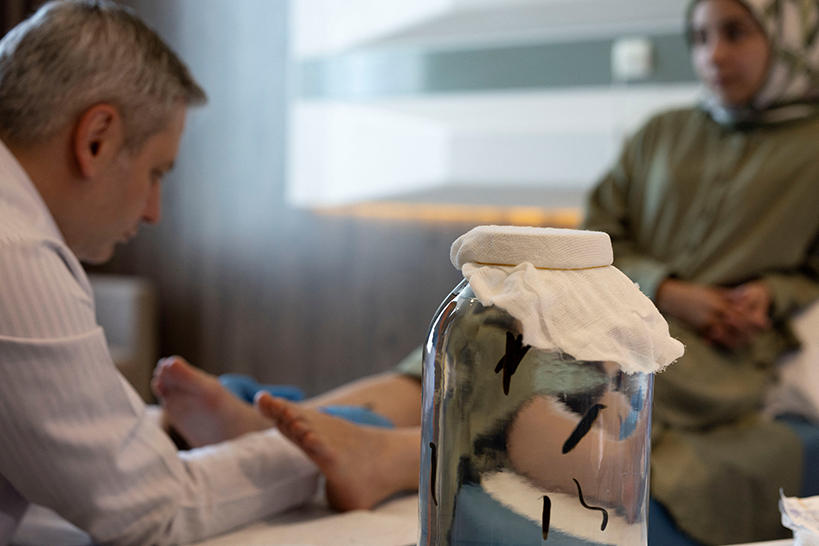
At the Istanbul hospital, Dilekci turned his focus to another patient with circulation problems. To treat her, he picked up black leeches from distilled water, most of which were willing to latch onto the patient’s feet.
He said they release enzymes like hirudin, a natural anticoagulant that improves blood flow and tissue repair, and they are preferred by patients with varicose veins, lymphatic issues and joint pain.
Only certified leeches from sterile farms are used in hospitals, he said, and they are disposed of after one treatment to avoid infection risks.
The treatments – and the official oversight – bring patients from Europe, the Middle East and Central Asia, Dilekci said.
The World Health Organization (WHO) recognises the diversity and value of traditional, complementary, and integrative medicine in contributing to health, wellbeing, people-centred care, and universal health coverage, it says on its website.
When appropriately integrated into national health systems, the WHO said the practices can improve health outcomes and it supports countries adopting them safely, effectively and based on the latest scientific evidence.
(Reporting by Ezgi Erkoyun)