No Result
View All Result
Mobile
Subscription
  • Home
  • Britain
  • China
  • Business
  • World
  • Culture
  • Opinion
  • Newspaper
Friday, November 6, 2026
中文
  • Home
  • Britain
  • China
  • Business
  • World
  • Culture
  • Opinion
  • Newspaper
No Result
View All Result
Sky Eco News
No Result
View All Result

NASA’s 22-year-old Swift satellite telescope falls from orbit in fiery finale

NASA’s 22-year-old Swift satellite telescope falls from orbit in fiery finale

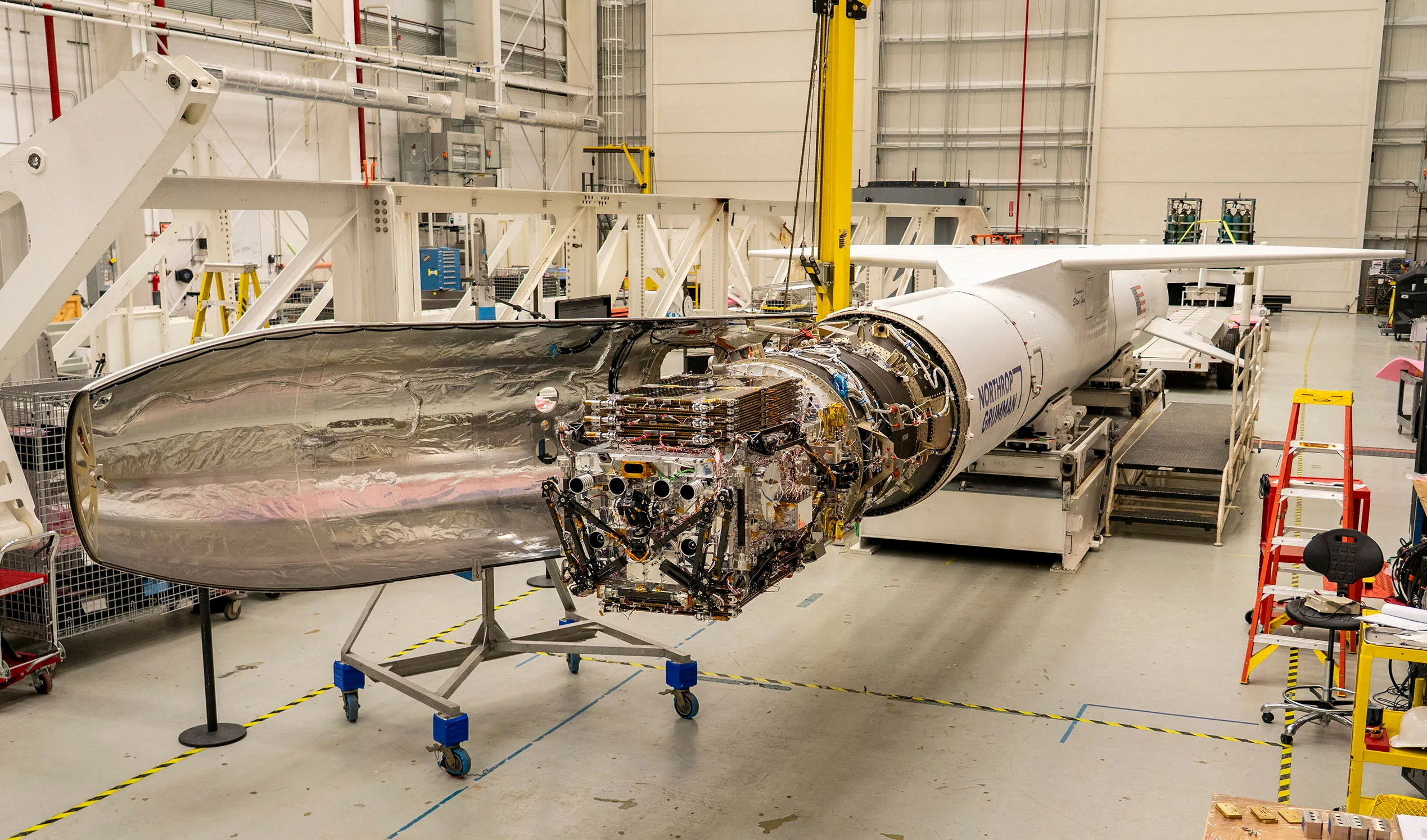
FILE PHOTO: The special rescue spacecraft LINK, which flew on a failed mission designed to extend the life of NASA's Neil Gehrels Swift Observatory. The spacecraft awaits encapsulation aboard a Northrop Grumman Pegasus XL at NASA's Wallops Flight Facility in Virginia, U.S. June 8, 2026. REUTERS/NASA/Ron Beard /File Photo

NASA’s Swift satellite telescope, which spent two decades studying the most powerful known blasts of energy in the cosmos, tumbled out of orbit as expected on Wednesday and burned up in Earth’s atmosphere over Indonesia, the space agency reported.

The fiery demise of the Neil Gehrels Swift Observatory, weighing roughly 3,200 pounds (1,452 kg), came less than three months after a rescue spacecraft failed its mission to boost the satellite to higher orbit and extend its life.

The US Space Force confirmed that Swift’s re-entry occurred at 7:39 a.m. EST (1239 GMT), as the satellite streaked into the upper atmosphere at about 22 times the speed of sound over Indonesia’s North Sumatra province, roughly 200 miles (322 km) north of the equator, according to NASA.

NASA said it expected the frictional heat of re-entry would incinerate most of the satellite well above Earth’s surface, with some fragments surviving the plunge, though the US space agency reported no damage or injuries on the ground from falling debris.

It was not immediately clear how close the telescope’s re-entry point was to North Sumatra’s capital and largest city, Medan, home to about 2.5 million people. The population of the province as a whole totals around 16 million.

The Space Force had earlier calculated the risk posed to populated areas as very low, putting the odds of harm coming to anyone on Earth at one chance in 2,100.

Dean Sladen, an aerospace engineer for Britain-based industrial parts supplier Accu Components, said prior to re-entry that only a “handful of small, scorched fragments are expected to make it down, nothing recognizable as a telescope.”

“Satellites this size re-enter the atmosphere regularly, and in nearly 70 years of spaceflight no one has ever been killed by falling debris,” Sladen said in an email.

The risk of a re-entry accident grows over the longer term, “which is why designing satellites to come down safely matters more and more,” he added.

NASA’s prized $500 million Swift satellite was primarily designed to study gamma-ray bursts – the most intense blasts of energy in the universe – using its multi-wavelength array of three telescopes.

Since its launch in 2004, Swift had also studied hundreds of supernova explosions, star-shredding black holes, stellar X-ray flares, asteroids and comets, contributing to some 7,000 published scientific papers. It ceased operations on October 20.

The observatory, which lacked its own propulsion system, had long outlasted its two-year design life and had been drifting toward orbital instability for months.

In July, NASA and Arizona-based startup Katalyst launched a specially built rescue vehicle called LINK on a mission to rendezvous with Swift, latch onto the satellite and tug it into a higher, more sustainable orbit.

But the LINK spacecraft itself began spinning uncontrollably soon after reaching space, and by mid-August, mission managers abandoned the effort, resigned to letting Swift fall back to Earth.

(Reporting by Steve Gorman)
Post Related

As demographic crisis bites, Italy cuts school staff

As demographic crisis bites, Italy cuts school staff

Italy's government is cutting back on teachers and janitors as the country's plunging birthrate reduces the number of children in...

Priced out: Milan’s cost of living drives away teachers

Priced out: Milan’s cost of living drives away teachers

Massimiliano Matteri, a 49-year-old teacher from Dongo, a small town on Lake Como, was thrilled when he landed a full-time...

Fashion’s AI era: face swaps and digital clones

Fashion’s AI era: face swaps and digital clones

AI-generated fashion models present a tantalizing opportunity for brands: the ability to create lifelike images for their retail websites while...

UN sees higher global warming, even in best-case scenario

UN sees higher global warming, even in best-case scenario

Global warming is now projected to exceed previous estimates, with even the most optimistic scenario seeing average temperatures rise to...

Global food inflation is expected to intensify as supply shocks pile up

Global food inflation is expected to intensify as supply shocks pile up

Muhamad Yasin, a 63-year-old parking attendant in central Jakarta, says he has cut back on meals as rising prices have...

High debt, growing strains put focus on need for new development approaches

High debt, growing strains put focus on need for new development approaches

High debt levels, rising debt-service costs and a sharp drop in official development assistance are forcing developing countries and institutions...

Top news

  • NASA’s 22-year-old Swift satellite telescope falls from orbit in fiery finale
  • Midterms over, Democrats plunge into wide-open 2028 presidential race
  • Midterms upended Congress but Trump still commands foreign policy
  • Lula’s election win dashes US hopes of quick access to Brazil’s rare earths
  • Beaten at home, Trump faces stark choice on Iran: deal or escalation
SKY ECO NEWS

© 2024 SEMG.

About Us

  • Chinese Emassy, London
  • Embassy of the United Kingdom
  • Xinhua
  • People’s Daily
  • China Daily
  • GlobalTimes
  • The Times
  • BBC

Message

No Result
View All Result
  • Home
  • Britain
  • China
  • Business
  • World
  • Culture
  • Opinion
  • Newspaper

© 2024 SEMG.