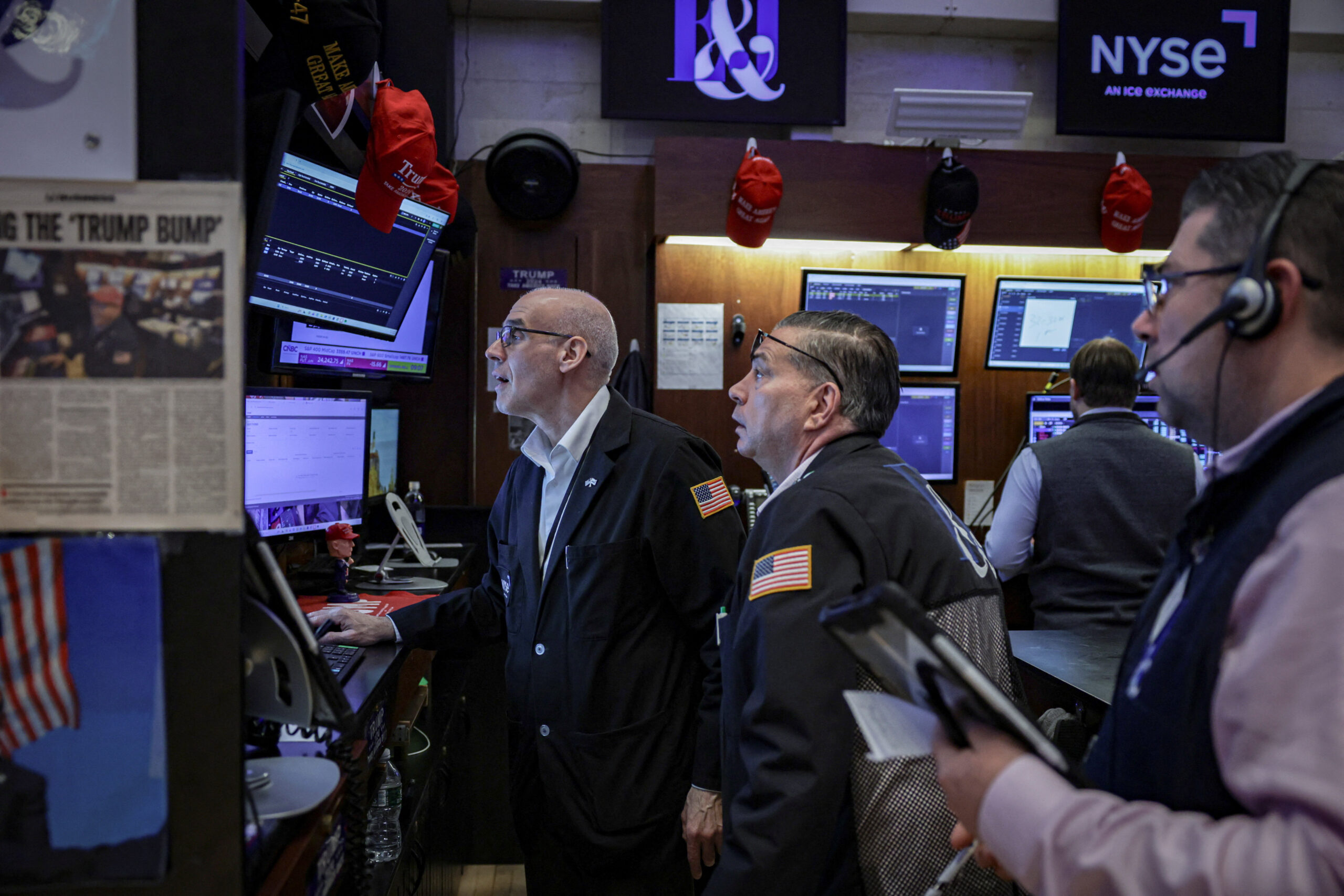
The war in Iran has sparked chaos across financial markets, leaving some investors and market makers reluctant to take on risk, making trading harder and costlier – a scenario regulators watch closely.
None of the world’s biggest markets, from U.S. Treasuries, to gold, to currencies have been spared, investors and traders said. In Europe, hedge funds, which now dominate bond trading, added to those dynamics as they rapidly unwound a number of bets this month.
Investors say they have at times struggled to get prices, or execute trades over the past four weeks, as market makers fear being stuck with large positions that could quickly become unprofitable.
“When we try to trade, it takes longer to trade. (The market makers) want us to be more patient, cut the trades into smaller sizes,” Rajeev De Mello, chief investment officer at GAMA Asset Management, said, adding gaps had widened between the price at which market makers would buy an asset and at which they would sell it. “What that has as a consequence is that everybody’s reduced the sizes of their positions.”
Various measures of volatility have soared to levels seen in previous market crises, including those for stocks, bonds, oil and gold.
Cracks have emerged even in the usually deep and liquid government bond markets, a cornerstone of global finance that has been hit hard as inflation risks spook investors.
The difference between bid and ask prices on newly issued two-year U.S. Treasuries, a key measure of market depth and transaction cost for the most widely traded securities, has meanwhile widened roughly 27% in March, compared with February levels, according to Morgan Stanley, suggesting dealers are charging a higher premium to take on risk.
PAIN IN FUTURES MARKET
To be sure, the latest symptoms of market stress are not uncommon during bouts of market turmoil, such as during U.S. President Donald Trump’s “Liberation Day” tariffs last April and the 2020 COVID pandemic.
But this round of volatility has arrived at a time when markets had been in an expansive mood, as investors rode a runaway rally across asset classes, suggesting a deeper correction may materialise if the war drags on and liquidity evaporates.
In Europe, the pain has been particularly stark in the futures market for short-term interest rates, where traders rapidly priced steep central bank rate hikes.
Liquidity became “severely diminished” at one point, operating at 10% of usual levels, Morgan Stanley’s co-head of EMEA rates Daniel Aksan said.
“The (illiquidity, price moves) reminded me of the COVID days,” he said.
Three European financial regulators on Friday said ongoing geopolitical tensions, namely the war in the Middle East, pose significant risks to the global financial landscape through higher energy prices, potential inflationary pressures and weaker economic growth. They reiterated their warning about the impact of volatility on liquidity and the risk of sudden price swings.
PROTECTING BOTTOM LINES
Trading has thus far remained orderly, but buyers are becoming increasingly scarce as investors rush to de-risk and move into cash, leaving dealers hesitant in turn.
“Firms have lost so much money – whether it’s sell-side or buy-side – that liquidity is suffering because you don’t have the players,” said Tom di Galoma, managing director of global rates trading at broker-dealer Mischler Financial, referring to the U.S. Treasury market.
While trading volumes in Treasuries have surged, analysts say some of these trades have been done out of necessity, not by choice.
“With a wider bid-ask spread, it is more expensive to put on a trade and would be less attractive for people to enter into trades, but the fact that you still see really high volumes suggest that some of these trades were unwinds, or stop-outs,” said Morgan Stanley U.S. rates strategist Eli Carter. HEDGE FUNDS IN EUROPE
The particularly sharp selloff in European bonds has also served as an example of the impact hedge funds may have on that market at times of stress, a risk the Bank of England in particular has flagged as their footprint has grown rapidly in recent years.
Hedge funds now make up over 50% of trading volumes in Britain’s and euro zone government bond markets, according to the latest Tradeweb data from 2025.
While their presence in the bond markets provides liquidity in good times, many had piled into the same trades, some of which quickly proved loss-making.
Hedge funds took steep losses on betting the BoE would cut rates, three hedge fund investment sources said. They also took hits on trades that bet on steeper European yield curves and on trades that assumed the gap between Italian and German bond yields would stay narrow, Credit Agricole’s head of European government bond trading Bruno Benchimol said.
As they all unwound similar positions at the same time, that pushed bond dealers to widen bid-ask spreads, Benchimol added.
When hedge funds all de-risk at the same time “it exacerbates volatility,” said Morgan Stanley’s Aksan. At other times, they took positions that helped dampen volatility, he said. STAYING IN THE MARKET
But market makers still have pressure to win business even as clients reduce the frequency and size of trades.
Sagar Sambrani, a senior FX options trader at Nomura, said pricing for larger ticket orders had widened versus normal market conditions to account for market risk. But, “counter-intuitively, the pricing on smaller tickets is tighter than in regular conditions as market makers strive harder to capture the reducing client flows,” Sambrani said.
But sometimes this is not possible.
In the gold market, which is highly sensitive to interest rates, Mukesh Dave, chief investment officer at Aravali Asset Management, a global arbitrage fund, said there were days when market makers were absent altogether, indicating an unwillingness to transact.
The price of normally safe-haven gold plunged this month after a record rally in 2025.
“They don’t want to make money at the moment, they don’t want to lose money by being in the market. If given a choice, they don’t want to be in the market,” Dave said.
(Reporting by Gertrude Chavez-Dreyfuss)