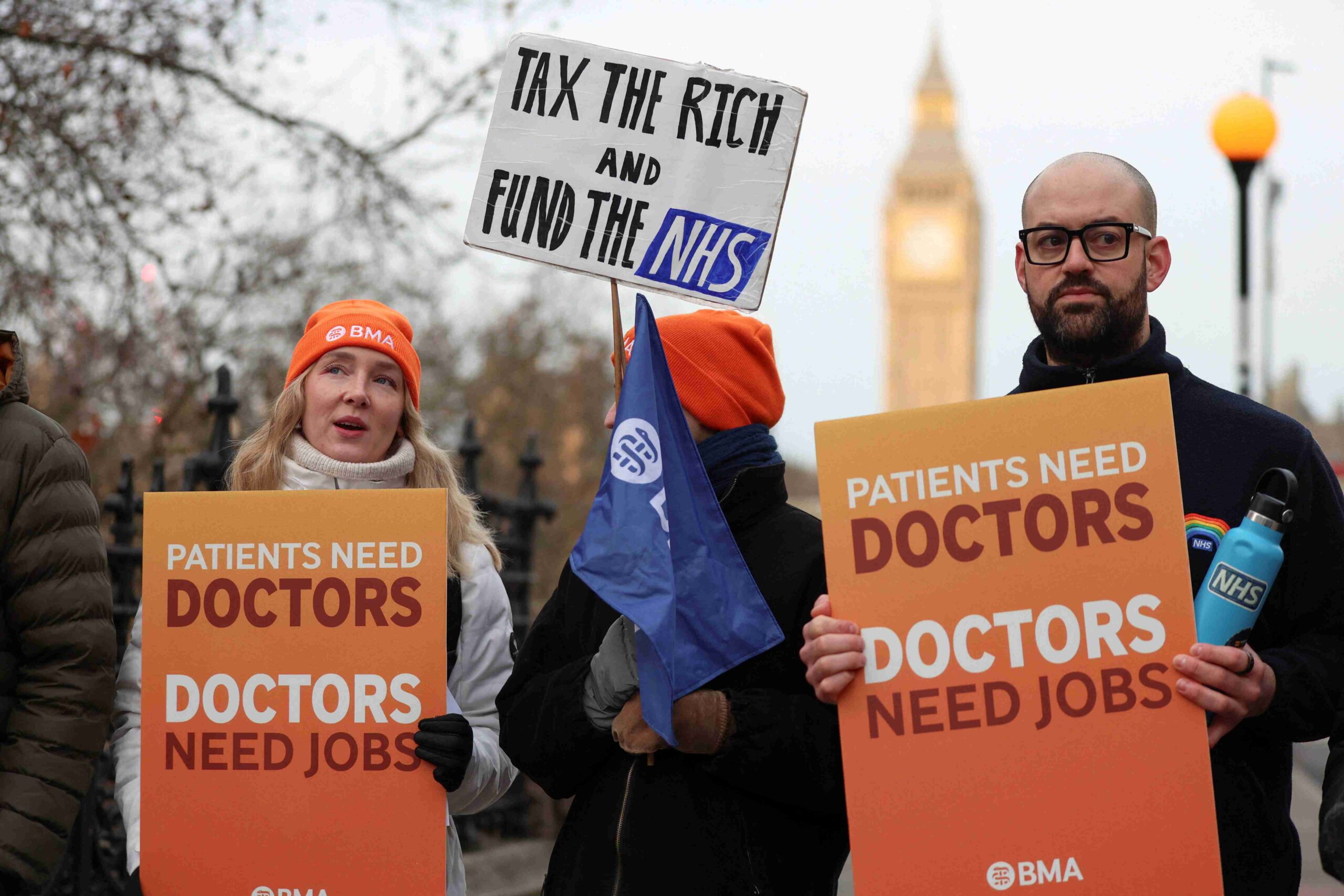
Resident doctors in England will strike for six days in April after rejecting a government pay offer, the British Medical Association said on Wednesday, escalating a long-running dispute over pay and staffing pressures in the National Health Service.
The walkout, due to run from April 7 to April 13, follows weeks of negotiations in which the union concluded the government’s final offer fell short of restoring pay that it says has been eroded in real terms over the past decade.
The BMA represents about 55,000 of the so-called resident doctors, who make up nearly half of the medical workforce.
Health minister Wes Streeting said he was “really disappointed” by the decision and accused the union of having expectations that were “beyond reasonable and realistic”. He told Sky News that, under government changes, resident doctors “would have been 35.2% better off” than four years ago.
OFFER DOESN’T GET BETTER THAN THAT, MINISTER SAYS
Under the proposal, the government offered a 3.5% pay award for 2026/27, in line with the pay review body’s recommendation, alongside changes to pay progression that would be phased in over three years.
The package also included reimbursement of mandatory exam fees from April 2026, between 4,000 and 4,500 additional specialty training posts over three years, and measures to improve contractual arrangements.
The BMA said the structure of the offer – particularly the multi-year phasing of pay progression and what it described as a below-inflation uplift – risked locking in further erosion of earnings.
Jack Fletcher, chair of the committee, said the union could not recommend a deal that “barely treads water” at a time when doctors continued to leave for better-paid roles overseas.
“No strikes need to happen, but government will need to act fast to prevent them,” he said.
Streeting said the union “may well want to reconsider, because the offer doesn’t get better than this, and as the disruption occurs and as the costs mount, we simply won’t be able to afford to offer this again.”
Separately, union committees in Northern Ireland and Wales criticised the same 3.5% recommendation, warning that sub-inflation pay awards were undermining morale and pushing doctors to consider industrial action there.
(Reporting by Sam Tabahriti)