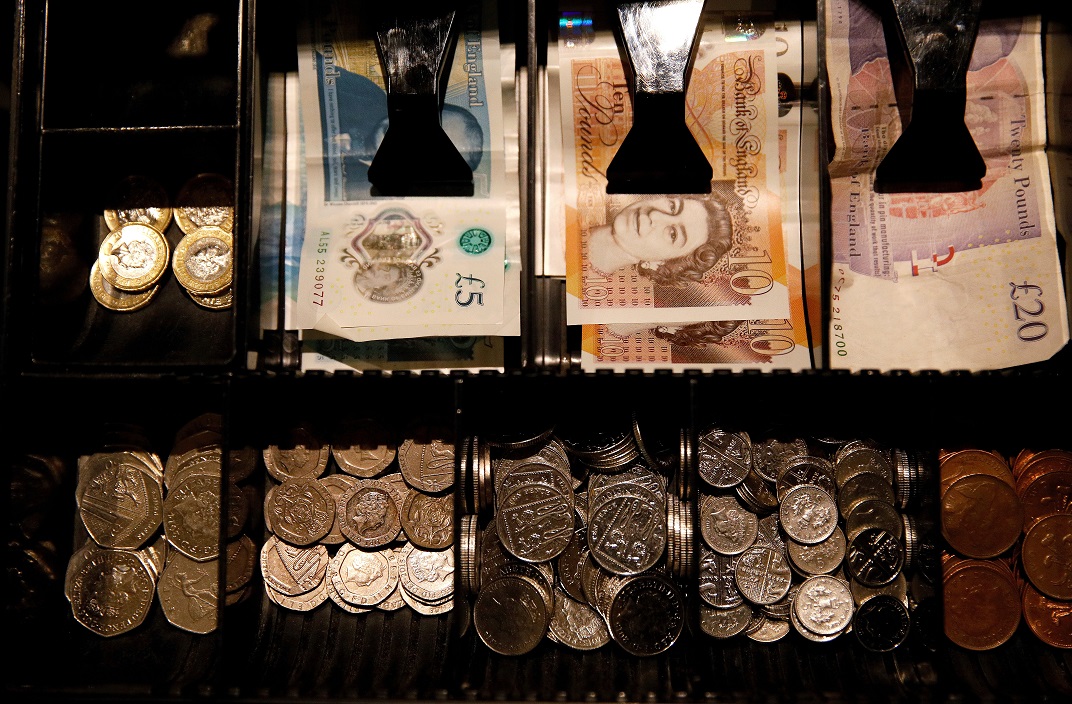
The pound edged lower on Friday after data showed the UK economy unexpectedly shrank in the three months to October.
Economic activity fell by 0.1% in the August-October period, and also by that amount in October alone, according to data from the Office for National Statistics. A Reuters poll had forecast zero growth in the three-month period.
Sterling fell 0.13% to $1.3367, while flattening against the euro, which was at 87.70 pence.
The pound was still heading for a rise of 0.3% this week, having hit a two-month high on Thursday. It was also set for a third successive weekly gain, largely as investors have sold the dollar on expectations of further Federal Reserve easing next year. [FRX/]
“At this stage it is not totally clear whether the recent weakness of the economy marks a fundamental downturn or whether it reflects a pre-Budget dip in spending and whether any such moves are temporary,” said Philip Shaw, chief economist at Investec.
Finance minister Rachel Reeves delivered a tax-raising budget on November 26.
UK RATE CUT EXPECTED NEXT WEEK
The Bank of England meets next week to decide monetary policy. Its rate-setting committee held rates steady last month in a tight 5-4 vote split but markets currently see a 90% chance of a drop in borrowing costs.
“We think this combination of monetary easing and fiscal restraint represents a negative policy mix for the currency, and thus expect sterling to be the regional laggard in 2026,” Goldman Sachs said in a note on Friday.
Investors will also be watching UK inflation and unemployment figures due next week.
BoE on Friday published a survey that showed British public expectations for inflation had inched lower in November.
In the meantime, the Confederation of British Industry bumped up its economic growth forecast for next year, citing a temporary boost to government spending following the budget, while warning that deep-rooted problems remain.
Kathleen Brooks, research director at XTB, said next week’s CPI data will be crucial for the outlook for UK rates and could cause significant volatility in the pound and the gilt market.
“The UK economy is now facing the spectre of stagflation, the worst of all worlds, which could further weigh on the economic outlook and the jobs market,” she said.
(Reporting by Joice Alves and Amanda Cooper in London)