U.S. President Donald Trump’s bruising blast of tariffs last week has thrown emerging market central banks a fresh curve ball with many now forced to make the tough choice between supporting economic activity and keeping fragile currencies stable.
Economies such as India and Indonesia had until now taken a cautious approach to interest rate cuts, keen to avoid the kinds of market meltdowns that have roiled their economies in past decades.
However, some of those market stability concerns are now taking a back seat as policymakers grow more worried about economic fundamentals. Analysts said that means some emerging market central banks could cut rates more aggressively than a more ambivalent U.S. Federal Reserve.
“I think that this kind of reconfiguration of economic priorities is likely to mean local currencies could face more headwinds this year as their banks shore up growth through easing monetary policy,” said David Chao, global market strategist for Asia Pacific at Invesco.
This meant that central banks in Asia, for the first time, could be easing ahead of the Fed, Chao added.
Emerging markets have historically been extremely vulnerable to sharp interest rates divergence with the U.S., which has triggered capital flight often with destabilising political and economic consequences.
Worsening already battered investor confidence last week were comments from Fed Chair Jerome Powell that suggested the bank would be in no rush to cut rates further, even as global markets tumbled.
That “wait and see” approach is a stark contrast to market pricing, which shows expectations for almost five quarter-point cuts in U.S. rates this year.
To be sure, many emerging markets over the past decades made their systems more resilient by building up foreign exchange reserves, heightening market surveillance and increasing fiscal discipline.
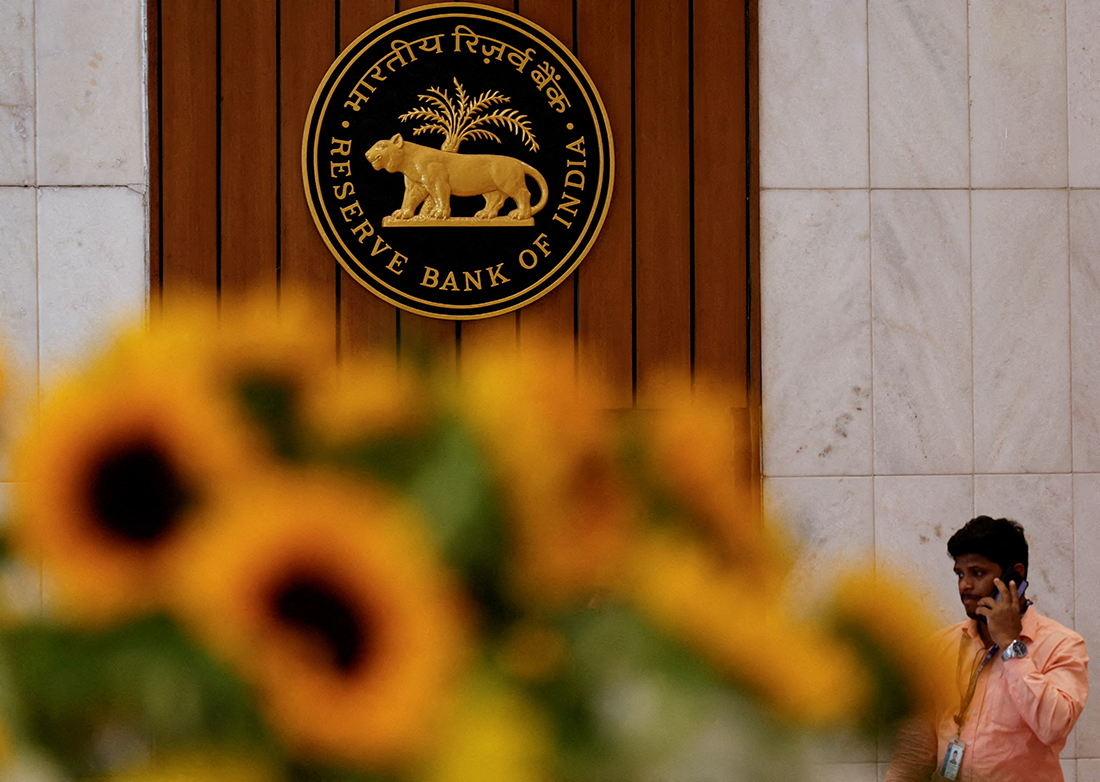
India delivered its first rate cut in five years in February but has in recent months also sought to mitigate a cash crunch in its banking system through liquidity injections rather than more rate cuts, which would pressure the rupee.
Tariffs, however, have changed that. India’s central bank is widely expected to cut rates by at least 25 basis points this week although the tariffs have now raised expectations of a deeper cut and another 50 basis points in rate cuts during the year.
REGIONAL DIFFERENCES
The challenges for emerging markets vary widely across regions and globally.
Indonesia, Southeast Asia’s largest economy, faces bigger constraints around rate cuts with its rupiah currency approaching lows not seen since the Asian financial crisis in 1998, weighed in part by investor concerns about the government’s spending plans.
The government is expected to intervene heavily to defend the currency when markets reopen after a 11-day holiday on Tuesday.
“A sharply weaker rupiah will likely result in a much longer pause in policy rates than would otherwise be the case, even if the bias is still to cut rates over time,” said Michael Wan, senior currency analyst at Mitsubishi UFJ Financial Group.
In Latin America, where most countries emerged with comparatively lower tariffs, central banks have broadly in recent months and years frontrun the Fed. However, the latest events will limit further room to manoeuvre.
Brazil could find itself in a particularly challenging situation as it seeks to manage unanchored inflation expectations after spending plans last year stoked fiscal concerns, sending the real currency to a record low.
Its central bank last month hiked rates by 100 basis points for the third consecutive time.
The Bank of Mexico, on the other hand, cut rates last month and warned of heightened uncertainty due to trade tensions amid a weakening economy. Mexico was not included in the slew of tariffs announced by Trump on April 2, but still faces previously announced 25% duties on a range of products.
“If you have lower growth, central banks, depending on whether they care about something else, should be cutting rates. But that might have an impact on the exchange rate that they don’t want,” said Aurelie Martin at asset manager Ninety One, adding she expected Asia and Mexico to be most affected.
“Many countries will likely have to face the dilemma again on whether they want to cut or hike into a recession.”
The new risks from last week’s tariffs, however, are creating even less favourable tradeoffs for many policy deliberations than was the case before.
South Korea, no stranger to financial crises, is also expected to face pressure to open its fiscal and monetary spigots more quickly but remains acutely aware of the risks of doing so in its highly leveraged economy.
“There are talks about economic stimulus policies and there certainly is a need for those, but we need to make sure they do not undermine what we have achieved in the last two to three years over household debt,” Bank of Korea Governor Rhee Chang-yong said last week after the tariff announcement.
(Reporting by Swati Bhat and Ira Dugal in Mumbai, Stefanno Sulaiman and Gibran Peshimam)