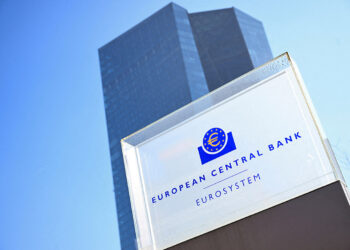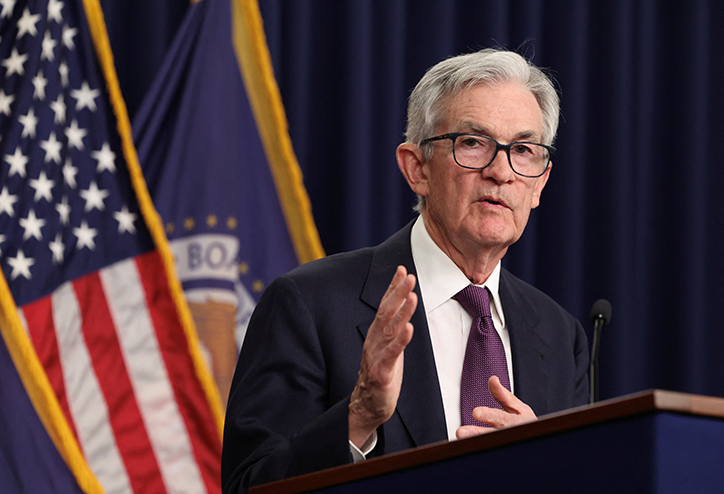
The U.S. central bank cut interest rates on Wednesday, as expected, but Federal Reserve Chair Jerome Powell said more reductions in borrowing costs now hinge on further progress in lowering stubbornly high inflation, remarks that showed policymakers are starting to reckon with the prospects for sweeping economic changes under a Trump administration.
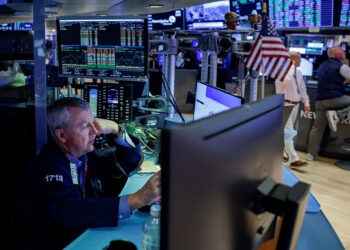
Powell’s explicit – and repeated – references to the need for caution from here on jolted Wall Street, sending stocks sharply lower, bond yields higher and leading investors to dial back estimates of how far borrowing costs are likely to fall over the coming year.
“I think we’re in a good place, but I think from here it’s a new phase and we’re going to be cautious about further cuts,” Powell said at a press conference after the central bank’s policy-setting Federal Open Market Committee cut its benchmark interest rate by a quarter of a percentage point at the end of a two-day meeting.
Powell described at length the ways in which inflation has improved since peaking in 2022, as well as the ways it has disappointed by moving “sideways” in recent months, with shelter costs in particular improving more slowly than the Fed expected.
While he said the Fed remained confident price pressures would continue to ease, he also acknowledged central bank staff and policymakers were beginning to at least preliminarily think through how President-elect Donald Trump’s promises of higher tariffs, tax cuts and tougher immigration policy will change the outlook.
In developing new projections, “some people did take a very preliminary step and start to incorporate highly conditional estimates of economic effects of policies into their forecasts at this meeting,” Powell said of an outlook in which U.S. central bankers anticipated a higher inflation outlook and fewer rate cuts next year.
An index of policymakers’ sense of risk around their projections also shifted sharply higher for inflation, with a separate measure of uncertainty increasing as well in an abrupt change from the outlook issued in September, before the Nov. 5 U.S. presidential election.
Powell said those changes were largely driven by data, but analysts saw the beginnings of a reckoning with Trump policies that many expect will add to inflation pressures.
The new projections show officials expect the personal consumption expenditures price index excluding food and energy costs, or core PCE, to be stuck at 2.5% through 2025, an improvement over this year’s 2.8% but significantly higher than the Fed’s 2% target.
“Uncertainty and upside risks to core PCE inflation both up sharply since September. This seems to largely reflect new government policies’ potential impact,” said Karim Basta, chief economist with III Capital Management.
ONE DISSENT
The Fed, which hiked rates aggressively in 2022 and 2023 to combat a surge in inflation, began its easing cycle in September with a half-percentage-point cut in borrowing costs, and followed up with a quarter-percentage-point cut last month.
Going into this week’s meeting the central bank had been widely expected to deliver a “hawkish” rate cut by estimating roughly half the policy easing in 2025 than the 100 basis points policymakers had projected three months ago. But by the time Powell had finished speaking, only one 25-basis-point cut for next year was reflected in market pricing.
The changed outlook highlights some of the challenges Trump may face delivering on key campaign promises, with tighter Fed policy likely keeping important consumer interest rates like those on home mortgages elevated, and less improvement on inflation undermining his pledge to lower prices.
Powell even said the decision to lower the policy rate to the 4.25%-4.50% range this time was a “closer call” than implied by financial markets that considered the cut a near certainty ahead of the meeting.
The decision drew a dissent from Cleveland Fed President Beth Hammack, who joined the central bank earlier this year and indicated she would have preferred to leave rates unchanged at this week’s meeting.
But Powell was also clear that the baseline outlook was for the economy to continue to perform well with ongoing growth, low unemployment and inflation that officials expect to drift slowly lower.
Rates will fall again once inflation shows it is making more progress, “with the extent and timing of additional adjustments to the target range” depending on “incoming data, the evolving outlook, and the balance of risks,” the Fed said in new language that sets up a likely pause to the rate cuts beginning at the Jan. 28-29 meeting.
U.S. central bankers now project they will make just two quarter-percentage-point rate reductions by the end of 2025.
That is half a percentage point less in policy easing next year than officials anticipated as of September, with Fed projections of inflation for the first year of the new Trump administration jumping from 2.1% in their prior projections to 2.5% in the current ones.
Slower progress on inflation, which is not seen returning to the 2% target until 2027, translates into a slower pace of rate cuts and a slightly higher ending point for rates at 3.1%, also to be hit in 2027, versus the prior “terminal” rate of 2.9% seen as of September.
TRUMP UNCERTAINTY
The new policy rate is now a percentage point lower than the peak reached in September when officials concluded inflation was likely on the way back to the 2% target and that there were risks to the job market of keeping monetary policy too tight for too long.
Key measures of inflation have changed little since then, while continued low unemployment and stronger-than-expected economic growth have sparked debate among policymakers about whether monetary policy is as tight as thought.
Though Trump doesn’t take office until Jan. 20, Powell said that Fed staff have been gaming out different scenarios for what could be an unpredictable year.
“It’s very premature to try to make any kind of conclusion. We don’t know what will be tariffed, from what countries, for how long and what size. We don’t know whether there will be retaliatory tariffs,” Powell said. “What the Committee is doing now is discussing pathways and understanding the ways in which tariffs can affect inflation.”
(Reporting by Howard Schneider and Michael S. Derby)